
Inclusive sizing apparel 2026 is no longer a niche trend — it is a core growth driver for streetwear and modern apparel brands. As consumer expectations shift toward body diversity, gender fluidity, and authentic representation, brands that expand their fit offering gain access to new customer segments and higher lifetime value. However, translating inclusive intent into profitable production requires deep understanding of pattern engineering, grading rules, fabric utilization, and sampling economics.
From the Guangzhou factory floor, different inclusive & gender-neutral sizing strategies carry very different implications for MOQ flexibility, fabric consumption, sampling complexity, and unit economics. Choosing the right approach is not just a design decision — it is a supply chain and margin decision.
This guide breaks down 8 practical types of inclusive sizing strategies that leading China factories are delivering in 2026, with production-focused details on grading, cost impact, and best-use scenarios.
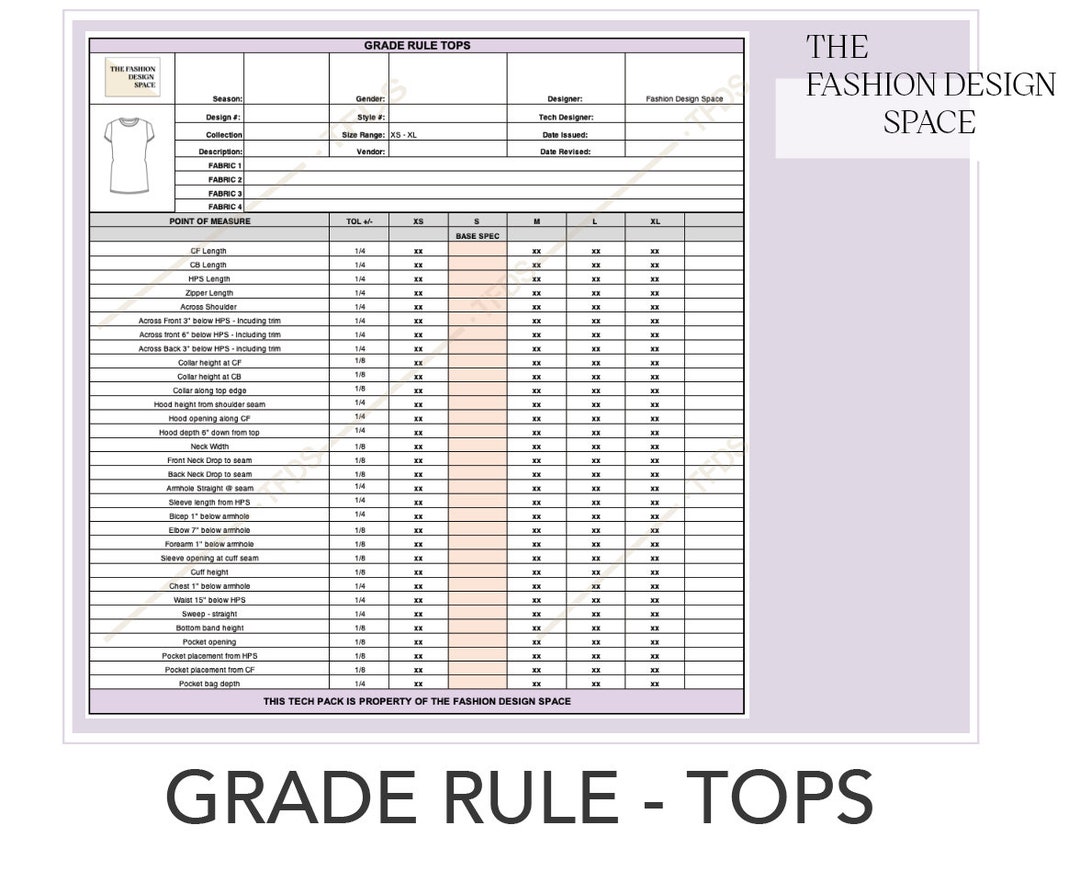
1. Extended Alpha Sizing (XS–5XL / 6XL+)
Definition & Production Reality Standard alpha sizing extended beyond traditional ranges using consistent grade rules (typically 2″ chest, 1.5–2″ waist/hip increments). Factories maintain a single base block and apply linear grading.
Key Production Points
- Fabric consumption increases 12–25% from size L to 4XL/5XL depending on silhouette.
- Pattern making is straightforward; minimal additional development cost.
- Sampling usually covers core sizes + 1–2 extended sizes for fit approval.
- MOQ impact: Many Guangzhou factories keep 100–300 pcs per style across the full range by producing extended sizes in consolidated runs.
Best For Streetwear brands adding plus sizes to existing collections without overhauling patterns. Quickest route to broader size offering.
Cost Range Estimate Unit cost premium for extended sizes: 8–15% above core sizes due to fabric. Development surcharge usually low or none.
2. Custom Brand-Specific Size Charts
Definition & Production Reality Factory works with brand’s target customer body data (or fit model measurements) to create proprietary grade rules and size charts. Not tied to standard US/UK/EU tables.
Key Production Points
- Requires detailed tech pack collaboration and often 2–3 fit sample rounds.
- Grading can be optimized for the brand’s aesthetic (more relaxed ease in streetwear, for example).
- Excellent for brands with strong data from previous sales or customer surveys.
- MOQ: Typically starts at 150–400 pcs per style; higher than pure extended alpha because of custom development.
Best For Growth-stage brands moving beyond “one size chart fits all” and wanting precise control over how their clothing fits real customers.
3. Gender-Neutral / Unisex Base Blocks
Definition & Production Reality Single pattern block designed with balanced proportions, adjusted shoulder slope, armhole depth, and ease distribution to flatter a wider range of bodies without being “men’s” or “women’s”.
Key Production Points
- One set of patterns serves multiple fits; reduces SKU complexity.
- Grading rules often use slightly larger increments in key areas (chest/shoulder) and more forgiving ease.
- Print and embroidery placement must consider broader body shapes.
- Fabric yield can be optimized across the size run.
Best For Brands building true gender-neutral or “uni-sex” collections, or men’s brands expanding into inclusive/neutral territory.
Cost Range Estimate Development cost higher initially (custom block creation), but long-term savings on pattern maintenance and sampling. Unit economics similar to standard once block is approved.
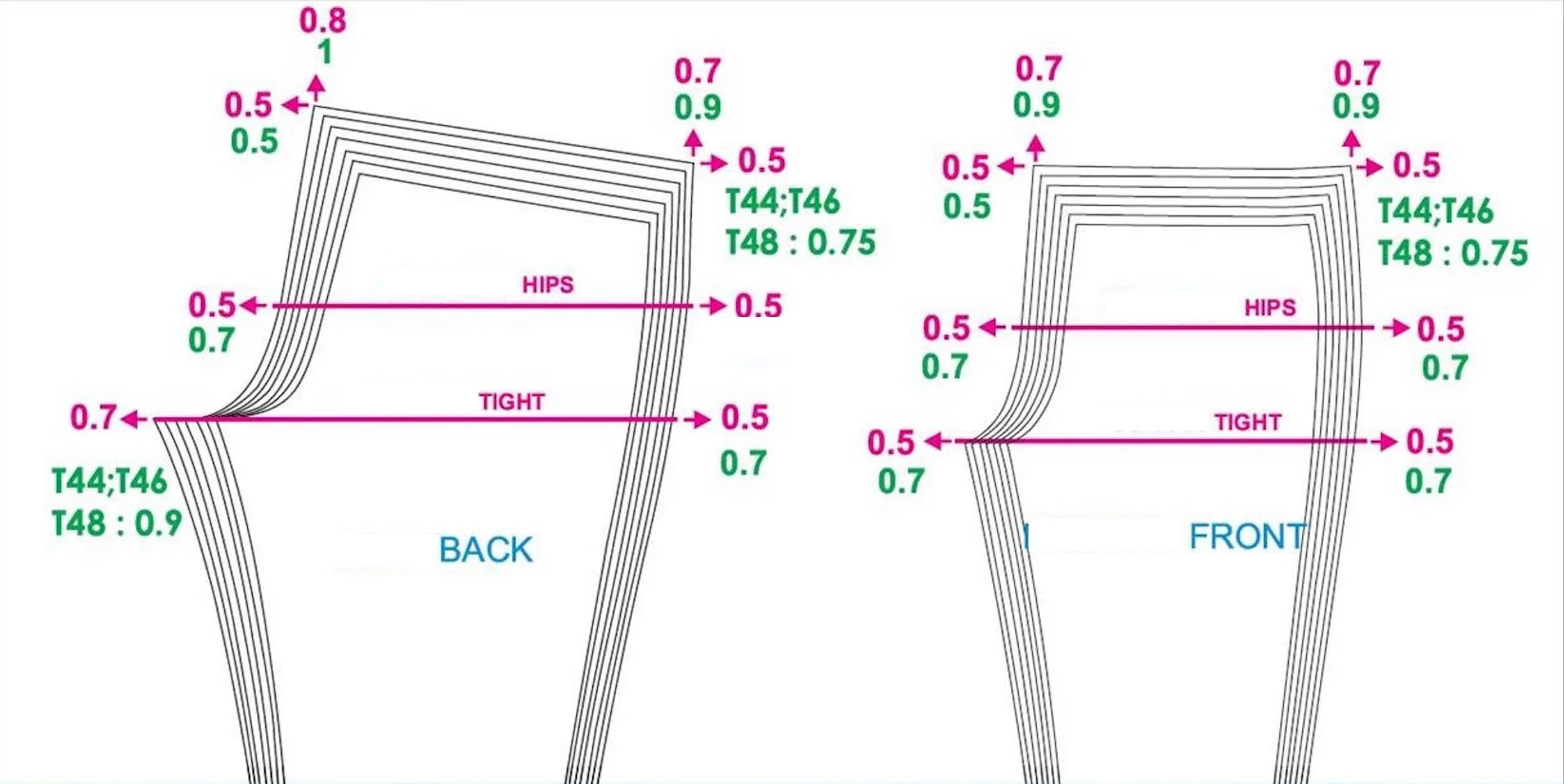
A fashionista’s guide to the basics of Pattern Grading – Fashion Insiders
4. Plus-Size Specialized Grading (Curvy-Optimized)
Definition & Production Reality Dedicated grade rules for plus sizes that account for different body proportions (larger waist-to-hip ratio, different bust placement, armhole and shoulder adjustments). Not simply linear extension of core sizes.
Key Production Points
- Requires separate base patterns or significantly modified grading for sizes 2XL+.
- Higher fabric consumption but better fit and reduced returns.
- Fit approval needs diverse plus-size fit models or 3D data.
- MOQ often 100–250 pcs per extended size or consolidated across plus range.
Best For Brands serious about plus-size customers who want garments that actually fit and flatter, not just “bigger versions” of straight sizes.
5. Vanity Sizing & Relaxed Modern Fits
Definition & Production Reality Nominal size labels are larger than traditional body measurements (e.g., a “Large” that actually fits what used to be XL). Combined with relaxed ease and modern streetwear silhouettes.
Key Production Points
- Achieved through adjusted base specs and grading, not just labeling.
- Popular in streetwear and casual categories for psychological appeal.
- Must be clearly documented in tech packs to avoid confusion in production.
- Low additional cost once decided; mainly pattern adjustment.
Best For Brands targeting younger demographics or wanting to position products as “comfort-first” or size-inclusive without heavy technical changes.

Decode Clothing Sizes: Is Vanity Sizing Fact or Fiction? – packlove
6. Numerical / Measurement-Based Sizing
Definition & Production Reality Size charts driven by actual body measurements (e.g., Chest 96–100 cm = Size 3 or “96/100”). Common in some Asian and European markets; growing in inclusive Western brands.
Key Production Points
- Reduces reliance on alpha labels that carry emotional baggage.
- Grading can be very precise (1–2 cm increments).
- Easier for international customers and data-driven brands.
- Requires clear communication and education in marketing.
Best For Brands selling globally or wanting to de-emphasize traditional size labels in favor of inclusivity and accuracy.
7. Modular & Hybrid Sizing Systems
Definition & Production Reality Separate sizing for tops and bottoms, or core sizes (S–XL) produced in high volume + extended sizes available via made-to-order or small-batch add-ons. Some factories offer “core + extended” hybrid programs.
Key Production Points
- Allows brands to run efficient high-volume core production while offering inclusivity on demand.
- Reduces inventory risk on slow-moving extended sizes.
- Requires strong inventory and order management integration with factory.
Best For Growth and mature brands balancing scale efficiency with inclusivity promises.
8. Data-Driven & Adaptive Inclusive Grading
Definition & Production Reality Factories use aggregated customer return/fit data, 3D body scanning datasets, or AI-assisted grading tools to continuously refine blocks for better fit across diverse bodies. Includes options for adaptive features (adjustable hems, etc.).
Key Production Points
- Highest upfront collaboration but lowest long-term return rates.
- Particularly valuable for direct-to-consumer brands with rich size and return data.
- MOQ and sampling similar to custom charts but with ongoing optimization.
Best For Mature inclusive brands or those building long-term differentiation through superior fit.
Comparison Overview: Production & Commercial Impact
| Type | Grading Complexity | Fabric Cost Impact | Typical MOQ Range | Best Brand Stage | Return Risk Reduction |
|---|---|---|---|---|---|
| Extended Alpha | Low | +8–15% | 100–300 pcs | Startup / Growth | Medium |
| Custom Brand Chart | Medium | Optimized | 150–400 pcs | Growth | High |
| Gender-Neutral Block | Medium-High | Similar or lower | 100–300 pcs | All | High |
| Plus-Size Specialized | High | +12–25% | 100–250 pcs | Growth / Mature | Very High |
| Vanity Sizing | Low | Low | Standard | Startup / Growth | Medium |
| Numerical Measurement | Medium | Optimized | 150–350 pcs | Growth | High |
| Modular / Hybrid | Medium | Variable | Flexible | Growth / Mature | High |
| Data-Driven Adaptive | High (initial) | Optimized | 150–400 pcs | Mature | Highest |
Procurement Decision Guide by Brand Stage
Startup Brands Start with Extended Alpha + Vanity Sizing or a simple Custom Brand Chart. Focus on 100–200 pc MOQ flexibility and fast sampling. Prioritize one or two hero styles in extended sizes first.
Growth Brands Add Gender-Neutral Blocks and Plus-Size Specialized Grading. Invest in proper fit kits with diverse models. Expect 5–12% overall margin improvement from reduced returns when executed well.
Mature / Scaling Brands Move toward Data-Driven Adaptive Grading and Hybrid Modular Systems. Use sales and return data to continuously refine blocks. Partner with factories that offer ongoing size optimization as a service.
FAQ: Real Questions from Inclusive & Gender-Neutral Brands
Q: Will offering extended and plus sizes significantly raise my MOQ or development costs?
A: Not necessarily. Many Guangzhou factories maintain 100–300 pc MOQs across extended ranges through consolidated production. Initial pattern development for plus or gender-neutral blocks adds cost, but it is usually recovered quickly through lower return rates.
Q: How much more fabric do larger sizes actually consume?
A: Typically 8–15% more from core to 3XL/4XL on relaxed streetwear silhouettes; up to 20–25% on fitted or tailored styles. Good pattern engineering and fabric selection can mitigate part of this.
Q: Can one factory handle both gender-neutral and traditional men’s/women’s lines efficiently?
A: Yes. Leading partners maintain multiple base blocks and can run parallel production. Clear tech pack separation and shared trims/ribbing help control complexity.
Q: What is the realistic sampling timeline for new inclusive size ranges?
A: 10–18 days for first fit samples on extended or gender-neutral blocks is standard with experienced factories; plus-size specialized grading may require one extra round with diverse fit models.
Q: How do we communicate inclusive sizing to customers without confusion?
A: Provide clear measurement-based size charts, fit descriptions, and model size references. Many brands pair alpha labels with “Designed for bodies XX–YY cm chest” language.
Conclusion: Inclusive Sizing Is the New Standard — Execution Wins
From the production front line, the brands that will win the next phase of streetwear and modern apparel growth are those that treat inclusive sizing as a technical and commercial system, not just a marketing statement. Efficient grading, smart fabric utilization, flexible MOQ, and data-informed pattern refinement separate profitable inclusive collections from costly experiments.
Realizing this at scale requires a manufacturing partner that combines deep pattern engineering expertise with genuine understanding of how different body types move, layer, and experience fit in streetwear. This is precisely the strength of specialized OEM/ODM factories like Qianshiwear — we help brands implement the right mix of the 8 strategies above with transparent costing, optimized grading, and production that scales from test drops to full inclusive collections.
Ready to expand your size offering profitably in 2026? Visit qianshiwear.com to discuss your current size range, target customer data, and the most suitable inclusive strategy for your brand. Let’s turn body diversity into your next competitive advantage.











