For experienced buyers, a BSCI audit report is only the starting point.
On paper, many factories may appear compliant.
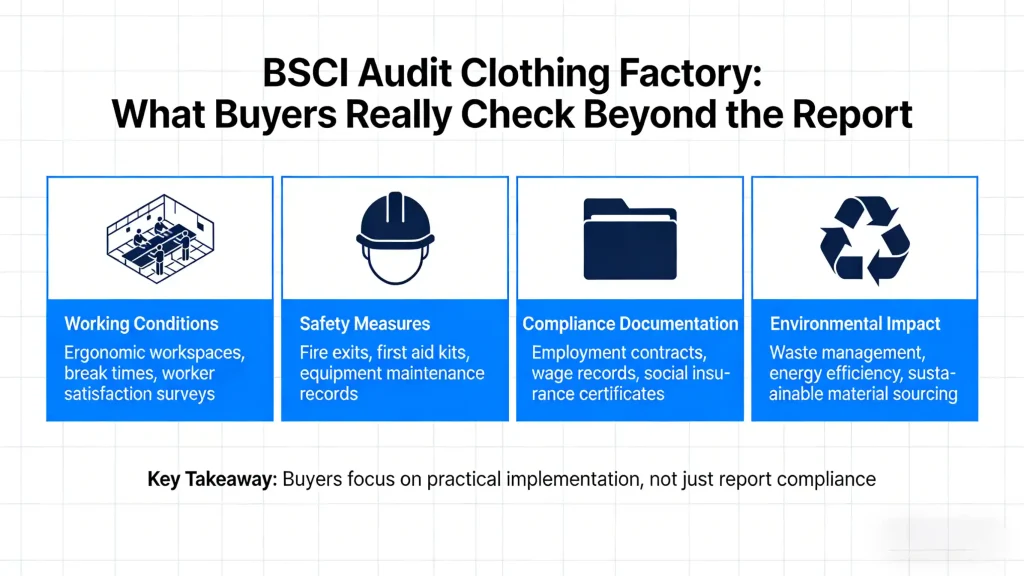
But in reality, mature brands and sourcing managers look far beyond the document.
Because selecting a clothing factory is not about passing one audit.
It is about choosing a long-term, reliable production partner.
What Is a BSCI Audit and Why It Matters
The Business Social Compliance Initiative (BSCI) is one of the most widely used audit systems in global apparel sourcing.
It evaluates whether a factory meets standards in:
- Labor conditions
- Working hours
- Wages and benefits
- Health and safety
- Environmental responsibility
For brands, it provides a baseline for ethical and compliant production.
However, the report alone does not reveal the full picture.
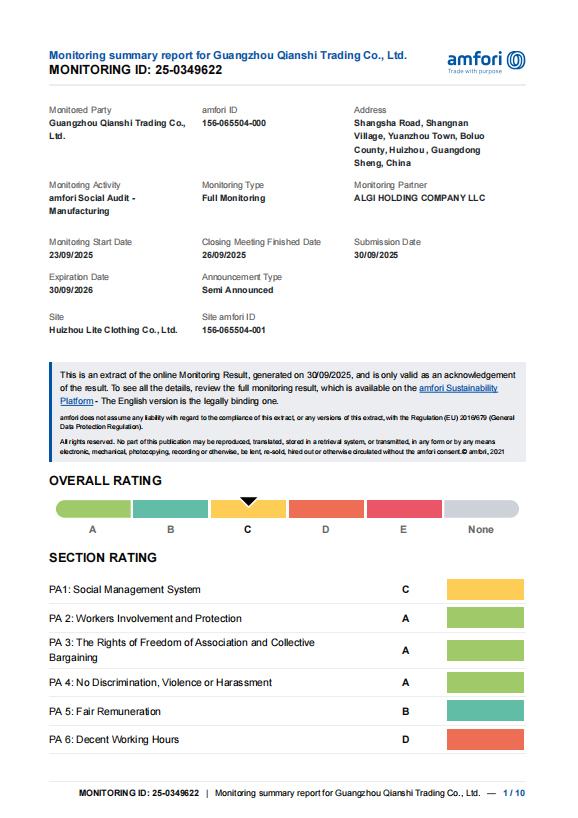
BSCI Audit Rating Levels Explained
Understanding the rating system is critical for buyers.
| Rating | Meaning | Buyer Interpretation |
|---|---|---|
| A | Outstanding compliance | Low risk, highly reliable |
| B | Good compliance | Acceptable for most brands |
| C | Improvements needed | Usable with caution |
| D | Significant issues | High risk |
| E | Non-compliant | Not acceptable |
What Experienced Buyers Actually Look For
- Consistency across audit cycles
- Improvement trends over time
- Transparency in corrective actions
A factory with a stable B-level and continuous improvement may be more valuable than one-time A-level performance.
The Hidden Focus: Working Hours and Wage Calculations
This is where many audits become “technical”—and where real risks exist.
Working Hours
BSCI requires:
- Controlled overtime
- Legal working hour limits
- Proper rest days
But buyers also examine:
- Whether peak seasons are manageable
- If overtime is systematically controlled or temporarily adjusted for audits
Wage Structure
Beyond minimum wage, brands review:
- Overtime pay accuracy
- Bonus and allowance transparency
- Payment consistency
| Risk Area | What Buyers Watch |
|---|---|
| Underreported overtime | Long-term compliance risk |
| Manual payroll systems | Error-prone |
| Inconsistent records | Lack of control |
A clean audit is important.
But repeatable compliance systems matter more.
Environmental Requirements Are Becoming Stricter
Recent years have brought stronger environmental expectations.
Buyers increasingly check:
- Wastewater treatment processes
- Chemical handling and storage
- Fabric sourcing transparency
- Energy usage awareness
What This Means for Apparel Factories
Compliance is shifting from:
👉 “Passing inspection”
to
👉 “Building sustainable systems”
Factories that treat environmental standards as a long-term investment gain stronger trust.
The “Unwritten Rules” Behind BSCI Audits
This is what most suppliers don’t talk about—but buyers know.
1. Stability Over Perfection
A factory that performs consistently is more valuable than one that “optimizes for audits.”
2. Transparency Builds Trust
Buyers prefer factories that:
- Admit gaps
- Show improvement plans
- Communicate proactively
3. Systems Matter More Than Results
A good audit score without systems is fragile.
A structured factory with clear processes is scalable.
Why Big Brands Treat Factories as Long-Term Partners
For mature brands, supplier selection is strategic.
They prioritize:
- Reliability over price
- Consistency over speed
- Transparency over perfection
Because switching suppliers carries:
- Quality risks
- Timeline delays
- Brand reputation impact
Choosing the right factory once is cheaper than fixing mistakes later.
How Professional Factories Prepare for BSCI Beyond the Audit
A truly reliable BSCI audit clothing factory does not “prepare for audits.”
It builds compliance into daily operations.
Key Internal Systems
| Area | System Focus |
|---|---|
| Labor | Stable workforce management |
| Payroll | Structured wage tracking |
| Production | Realistic capacity planning |
| Compliance | Continuous monitoring |
This reduces audit pressure and improves long-term performance.
Conclusion: The Best Factories Don’t “Pass Audits”—They Build Systems
A BSCI report is a tool.
But it is not the decision.
In 2026, experienced buyers look for something deeper:
- Stability
- Transparency
- System-driven compliance
- Long-term reliability
Because in the end, manufacturing is not a transaction.
It is a partnership.
FAQ: BSCI Audits for Apparel Buyers
What is a BSCI audit in clothing manufacturing
It is a social compliance audit evaluating labor conditions, wages, safety, and environmental responsibility in factories.
Is a BSCI A rating always required
Not necessarily. Many brands accept B-level factories if they show stability and improvement.
What is the biggest risk in BSCI audits
Working hours and wage inconsistencies are the most common risk areas.
How can buyers verify real compliance
By reviewing audit history, observing factory operations, and evaluating management systems—not just reports.
Related Articles
BSCI and SMETA Audits: What They Mean for Your Clothing Supply Chain
GPSR Compliance Clothing Manufacturer China: Why European Brands Choose Ready Suppliers In 2026