As a streetwear manufacturing specialist with extensive experience aiding European and American indie brands, I’ve navigated countless challenges in apparel fabric weight and specs, composition and sourcing. UnderstandingGSM (grams per square meter) versus OZ (ounces per square yard) is crucial for production decisions, directly affecting the weight of a hoodie or weight of a sweatshirt in your collections. For instance, converting GSM to OZ helps ensure your pieces meet market demands for durability without excess bulk. This guide focuses on solving real issues like selecting materials for highest quality clothing while managing costs, incorporating insights on fabrics like French Terry and poly microfiber fabric to streamline your supply chain.
Mastering GSM to OZ: Essential Conversions for Fabric Weight
Fabric weight dictates garment feel and performance—lighter for summer drops, heavier for winter capsules. GSM measures weight in grams per square meter, common in global sourcing, while OZ uses ounces per square yard, prevalent in US markets. The conversion formula: OZ = GSM / 33.906. For example, a 300 GSM fabric equals about 8.85 OZ, ideal for heavyweight fleece in hoodies. Miscalculating leads to overstock or poor fit; always verify with samples.
In production, target 200-250 GSM (5.9-7.4 OZ) for tees to balance comfort and opacity. For sweatshirts, aim higher at 300-400 GSM (8.85-11.8 OZ) for structure. This prevents issues like sagging in oversized styles, common in indie runs.
To clarify, here’s a conversion table for common apparel weights:
| GSM | OZ (approx.) | Typical Use | Cost Impact (per yard, USD) | Scenarios |
|---|---|---|---|---|
| 100-150 | 2.95-4.42 | Light tees, summer layers | $4-6 | Casual drops, budget lines |
| 200-250 | 5.9-7.37 | Standard hoodies, shirts | $6-9 | Everyday urban wear |
| 300-350 | 8.85-10.32 | Heavyweight fleece sweatshirts | $8-12 | Premium winter collections |
| 400+ | 11.8+ | Oversized, durable outerwear | $10-15 | Statement pieces, high-margin |
Data based on industry standards—see Textile Exchange for more.

GSM To OZ Conversion Table | PDF | Systems Science | International …
Fabric Specs: Balancing Weight, Durability, and Performance
Beyond weight, specs like thread count and weave impact sourcing. For streetwear, prioritize abrasion resistance in poly microfiber fabric for active pieces, or moisture-wicking in Dri-FIT—often made of polyester blends. What is Dri FIT made of? Typically 100% polyester or poly-cotton mixes for quick-dry properties. In hoodies, a 320 GSM French Terry (looped interior) offers breathability at $7-10/yard, solving bulk issues in layered looks.
Control costs by specifying tolerances: ±5% on GSM to avoid variances in runs. For sustainable fashion brand goals, opt for organic cotton at 250 GSM, reducing environmental fees by 15-20%.
Comparison table for key specs:
| Spec | Light (150 GSM/4.4 OZ) | Medium (250 GSM/7.4 OZ) | Heavy (350 GSM/10.3 OZ) | Cost per Yard (USD) | Applicable Scenarios |
|---|---|---|---|---|---|
| Durability | Moderate | High | Excellent | $5-8 / $7-10 / $9-13 | Light: Tees; Heavy: Hoodies |
| Breathability | High | Medium | Low | Similar | Medium for all-season drops |
| Shrinkage Rate | 3-5% | 2-4% | 1-3% | +5% for treatments | Heavy for minimal rework |
| Eco-Impact | Variable | Low with organics | Higher material use | +10-15% premium | Sustainable lines |
Link to our French Terry blog for deeper dives.
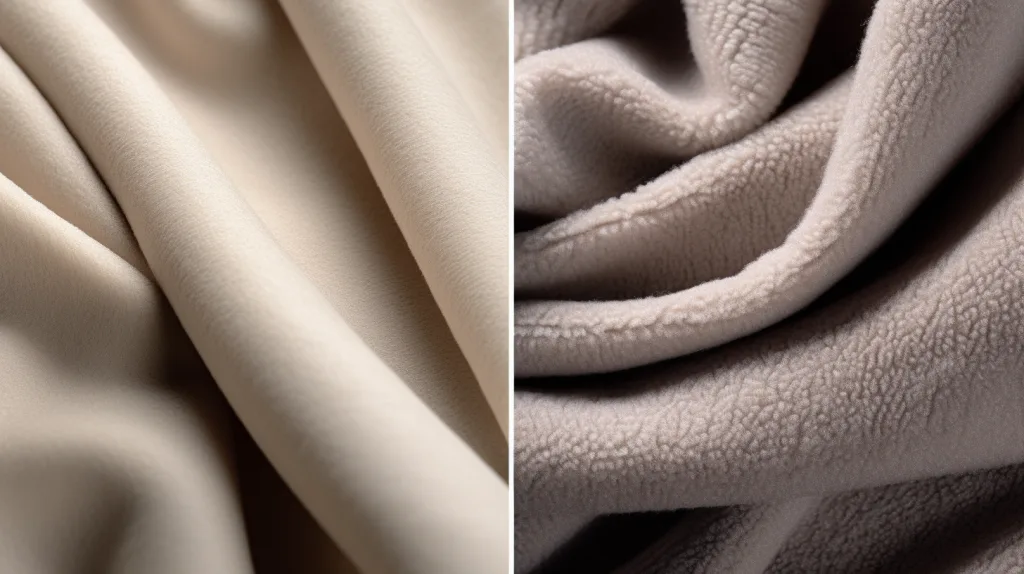
Fleece vs French Terry: Best Fabric for Custom Pullovers
Composition Breakdown: Materials for Optimal Apparel Performance
Fabric composition—fiber blends—affects sourcing and end-use. Cotton-poly mixes at 280 GSM (8.25 OZ) provide softness and stretch for sweatshirts, while satin (often made of silk or polyester) at 120 GSM suits accents. What is satin made out of? Traditionally silk, but modern versions use poly for affordability in urban designs.
For highest quality clothing, source 80/20 cotton-poly French Terry to minimize pilling. Poly microfiber fabric excels in lightweight, 150 GSM techwear for moisture management. Balance with cost: Pure cotton hikes to $9/yard, blends drop to $6.
Table for common compositions:
| Composition | Weight Range (GSM/OZ) | Properties | Cost per Yard (USD) | Scenarios |
|---|---|---|---|---|
| 100% Cotton | 200-300 / 5.9-8.85 | Breathable, soft | $7-11 | Basic tees, eco-friendly |
| Cotton-Poly | 250-350 / 7.4-10.3 | Durable, wrinkle-resistant | $6-9 | Hoodies, sweatshirts |
| Poly Microfiber | 100-200 / 2.95-5.9 | Quick-dry, lightweight | $5-8 | Activewear, Dri-FIT styles |
| Satin (Poly) | 100-150 / 2.95-4.42 | Smooth, shiny | $8-12 | Accents, premium finishes |
Explore what is satin made out of for variants.

Fabrics Explained for Fashion Designers – HOOK AND EYE UK
Alt: Diagram of fabric compositions for streetwear, highlighting blends like cotton-poly and microfiber for sourcing decisions.
Sourcing Strategies: Cost-Effective Tips for Indie Brands
Sourcing demands vetting suppliers for consistent GSM specs—aim for MOQs of 100-200 yards to test. For sustainable fashion brand alignment, prioritize GOTS-certified fabrics, adding 10% cost but boosting appeal in EU markets. Negotiate based on weight: Heavier fabrics like heavyweight fleece command bulk discounts.
Use digital tools for spec verification, cutting sampling costs by 20%. Link to Heavyweight Fleece or weight of a hoodie for related reads.
FAQ: Apparel Fabric Weight & Specs Queries
Q: How does GSM affect the weight of a sweatshirt?
A: Higher GSM increases overall weight; a 350 GSM sweatshirt feels premium but requires sturdy seams.
Q: Best sourcing for poly microfiber fabric?
A: Asian mills for cost, EU for sustainability—check OEKO-TEX.
Q: Conversion for 280 GSM to OZ?
A: Approximately 8.25 OZ; use the formula for precision.

7 tips to go green in the apparel sector | CBI
Conclusion: Forward-Looking Insights on Apparel Fabric Weight from Production Experts
From Qianshiwear’s OEM/ODM perspective, the shift toward hybrid compositions—like recycled poly in 250 GSM blends—will dominate as sustainable fashion brand demands grow amid regulations. Ultimate tip: Integrate GSM specs early in design to hybridize weights for versatile lines, reducing inventory risks. A professional manufacturer like Qianshiwear can source and optimize these, from GSM to OZ conversions to custom compositions, ensuring your indie visions scale cost-effectively. Visit our Solutions page or explore weight of a sweatshirt and what is dri fit made of for more.