In the competitive apparel supply chain, GOTS, OCS, and OEKO-TEX stand out as the three most requested sustainability certifications by brands targeting eco-conscious consumers. Yet procurement managers and founders often struggle to decide which delivers the best ROI for their line—whether premium streetwear hoodies or custom sweatsuits.
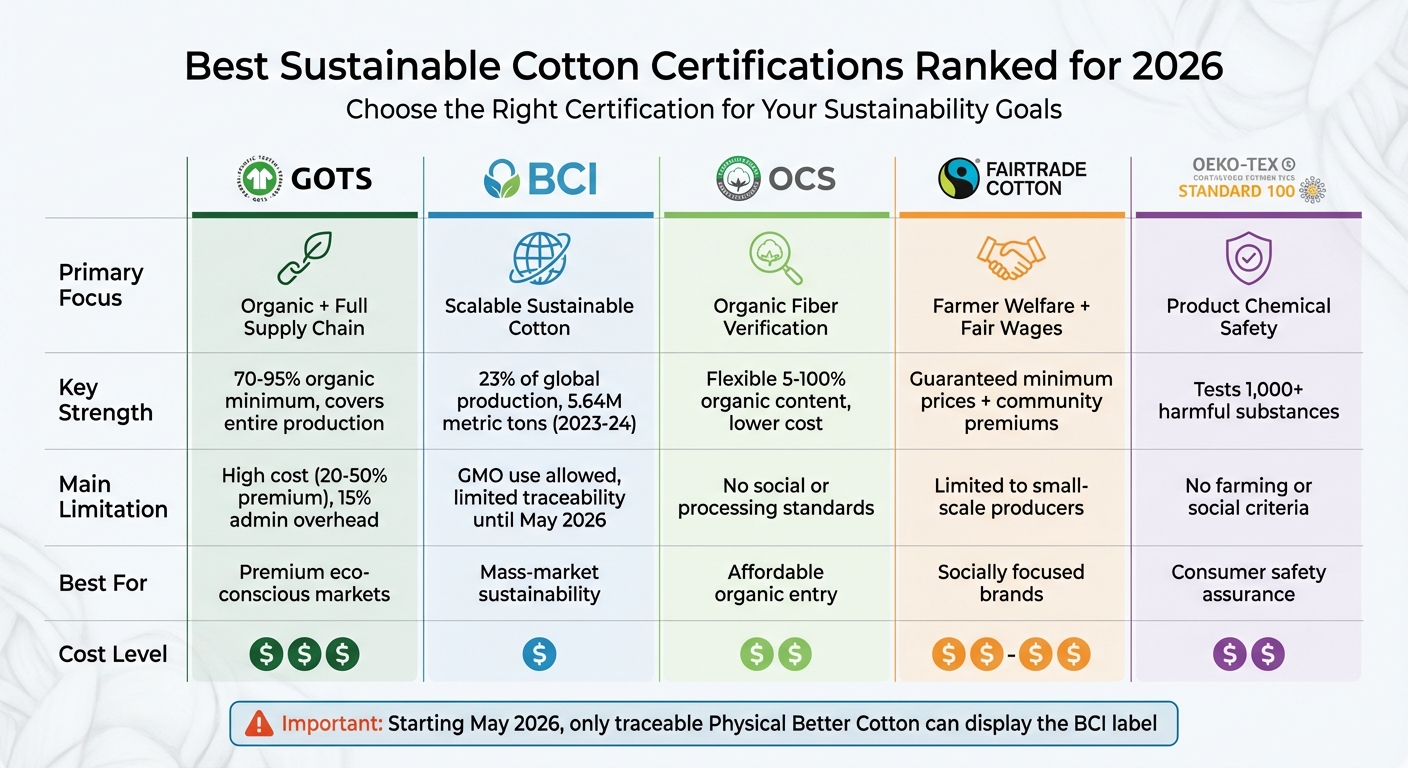
From a factory floor perspective, the differences are stark. GOTS demands full-chain traceability and social audits that add 15% administrative overhead and 20-50% material premiums. OCS offers flexible organic-content claims with minimal processing restrictions. OEKO-TEX Standard 100 focuses purely on chemical safety testing across 1,000+ substances, making it the lowest-barrier entry point.
Choosing wrong can inflate unit costs by 40% or force MOQ increases when certified fiber stocks run low. This factory-guided comparison breaks down standards, scope, costs, and real-world production impacts to give you clear procurement decision criteria.
1. Organic Content & Fiber Requirements
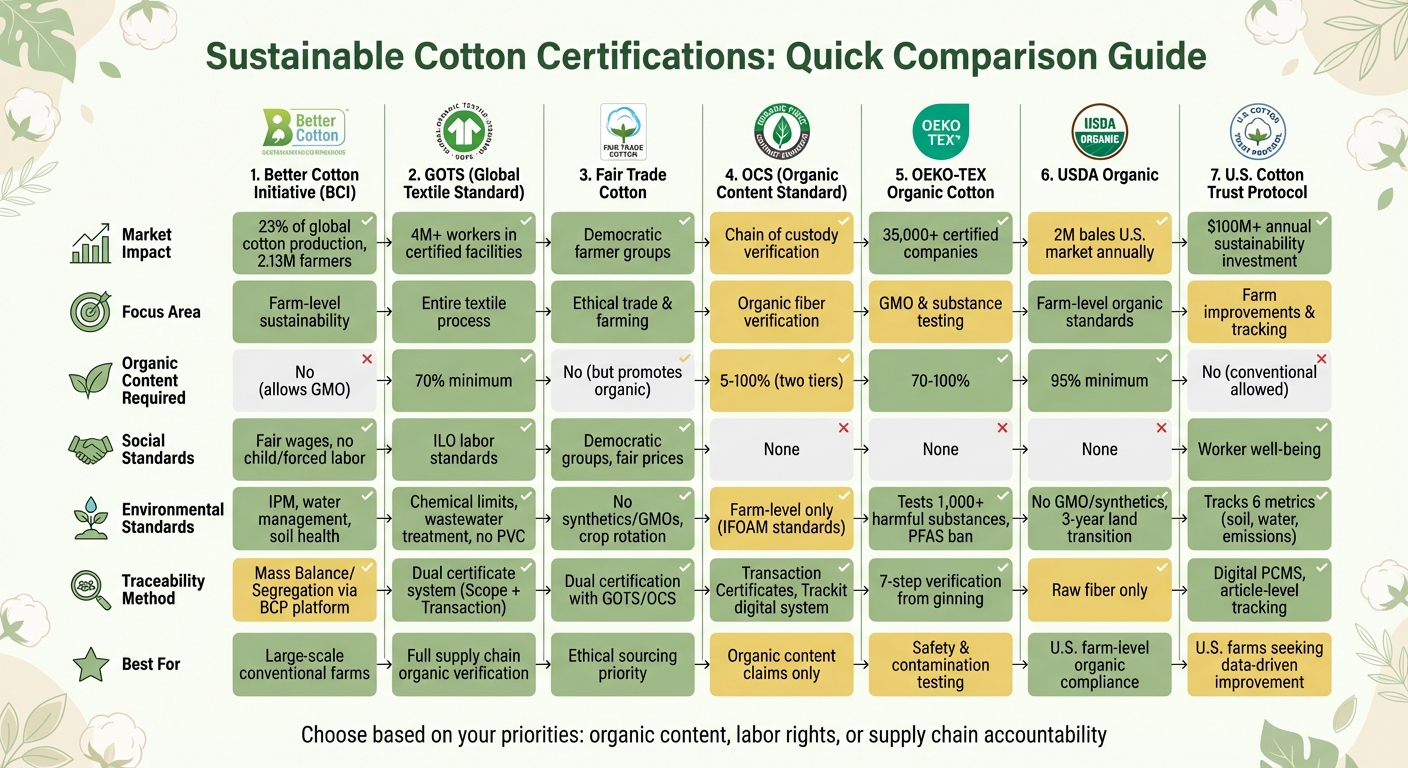
GOTS sets the strictest bar: finished products must contain at least 70% certified organic fibers for the “made with organic” label and 95% for the full “organic” label. It prohibits GMO cotton and requires physical segregation throughout the chain.
OCS (Organic Content Standard) is content-only: it verifies any percentage (5-100%) of organic fiber via transaction certificates. Blends are easy, and in-conversion cotton is allowed—ideal for cost-sensitive lines.
OEKO-TEX makes no organic claims at all (new 2025 rules explicitly ban GMO/organic references on certificates). It accepts conventional fibers as long as they pass chemical testing.
Factory insight: Sourcing GOTS fiber often raises MOQ to 2,000-3,000 yards per color because farms and spinners run certified batches in larger lots. OCS and OEKO-TEX allow smaller runs from existing inventory.

GOTS (Global Organic Textile Standard) Certification
2. Environmental & Chemical Criteria
GOTS enforces the tightest chemical limits plus wastewater treatment, no PVC, and energy/climate criteria (Version 8.0, 2026). It covers the entire wet-processing chain.
OCS stops at the farm gate—no chemical restrictions on dyeing or finishing.
OEKO-TEX Standard 100 tests every component (fabric, buttons, zippers) against product-class-specific limits (Class I for babywear is strictest). It bans PFAS and heavy metals but does not address farming or wastewater.
Factory insight: GOTS dyeing lines require dedicated eco-baths, adding 10-15% to processing costs and extending lead times by 1-2 weeks. OEKO-TEX lets us use standard lines with tested auxiliaries—faster turnaround for urgent replenishment orders.
3. Social & Labor Standards
Only GOTS mandates ILO-compliant labor standards, living wages, no child labor, and worker safety across farms and factories. Annual on-site audits are mandatory.
OCS and OEKO-TEX have zero social requirements.
Factory insight: Brands pairing GOTS with our SA8000/Wrap-certified facilities see smoother audits. Pure OEKO-TEX or OCS orders skip the social documentation layer, cutting certification prep time by 30%.
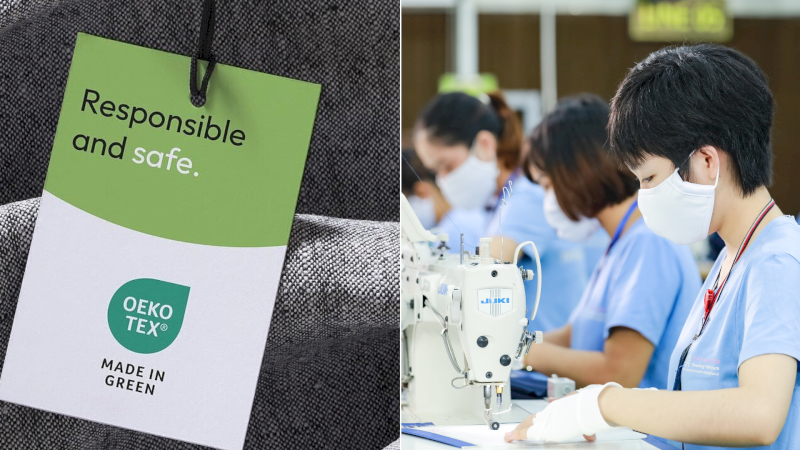
Top 10 OEKO-TEX Certified Garment Manufacturers for Responsible Apparel Production
4. Scope & Chain of Custody
GOTS covers the complete supply chain—from field to finished garment—with dual Scope + Transaction Certificates.
OCS uses chain-of-custody transaction certificates only for organic fiber percentage.
OEKO-TEX is product-focused: annual testing per article and facility, no full-chain traceability required.
Factory insight: GOTS traceability adds 5-7% to logistics cost (scannable QR codes now standard in 78% of facilities). OCS and OEKO-TEX keep paperwork lighter, suiting startups testing 500-piece runs.
5. Certification Process & Costs (2026 Figures)
GOTS: $1,200–$3,000 per facility annually + sales-based renewal fees (e.g., 0.379% on first £404k–£2.8M turnover). Plus on-site audits and GOTS entity fee (~€90/site). Total first-year outlay often exceeds $5,000 for mid-size factories.
OCS: Lowest barrier—transaction certificates only, no annual facility fee quoted publicly. Many brands achieve certification under $1,000 initial outlay.
OEKO-TEX: Modular and product-based. Typical range $500–$2,000 per year per facility depending on article count; testing per batch is the main variable.
Factory insight: GOTS pushes garment unit cost up 20-50% (e.g., heavyweight hoodie fabric jumps from $5–7 to $8–11 per yard). OEKO-TEX adds ~5-8%, OCS 10-15%. We routinely help brands hybrid-certify (OEKO-TEX + OCS) to keep premiums under 12%.

Top 10 OEKO-TEX Certified Garment Manufacturers for Responsible Apparel Production
6. Market Recognition & Consumer Perception
OEKO-TEX leads with 35,000+ certified companies and instant consumer trust for “safe for skin” claims—perfect for mass-market or baby lines.
GOTS commands premium positioning; 13,000 facilities (18% YoY growth) and strong recognition in Europe/North America for full sustainability stories.
OCS is rising for blended products but less visible to end consumers unless paired with % claims.
Factory insight: Retailers increasingly demand at least one certification. OEKO-TEX opens doors fastest; adding GOTS lifts sell-through by 15-25% on premium collections.
Comparison Summary Table
| Dimension | GOTS | OCS | OEKO-TEX Standard 100 |
|---|---|---|---|
| Organic Min. % | 70-95% | 5-100% (flexible) | None |
| Chemical/Env. Criteria | Full chain + wastewater | Farm only | 1,000+ substances tested |
| Social Standards | ILO full chain | None | None |
| Annual Cost/Facility | $1,200–$3,000+ | <$1,000 | $500–$2,000 |
| Best MOQ Fit | 2,000+ yards (certified lots) | Flexible stock | Any (standard lines) |
| Premium Positioning | Premium eco-luxury | Affordable organic blends | Safety-first / entry-level |
Best Sustainable Cotton Certifications Ranked for 2026: GOTS, BCI, and More
Procurement Decision Guide by Brand Stage
Startup phase (first 1-2 collections): Start with OEKO-TEX. Lowest cost, fastest approval, highest retail acceptance. Add OCS for simple “X% organic” claims without full-chain hassle.
Growth phase (scaling to 5,000+ units): Layer OCS on top. Keeps MOQ manageable while communicating organic content. Unit cost impact stays under 12%.
Mature/premium brands: Go full GOTS. The 15% admin overhead pays off in 20-30% higher margins and stronger retailer contracts. Many of our clients now run hybrid (OEKO-TEX + GOTS) to cover safety and story.
Decision tree: Need chemical safety + quick launch? → OEKO-TEX. Want organic % without social audits? → OCS. Seeking the complete traceable sustainability narrative? → GOTS.
FAQ: Real-World Answers from the Factory Floor
Q: Can MOQ be reduced for certified products?
A: Yes. We maintain certified fabric inventory and offer pooled production runs—MOQ drops to 300-500 pieces for OCS/OEKO-TEX and 1,000 for GOTS using existing stock.
Q: Which certification raises unit cost the most?
A: GOTS (20-50% fabric premium + audits). OEKO-TEX typically adds only 5-8%. We provide exact landed-cost quotes within 48 hours.
Q: Do I need separate audits for each?
A: No. A single factory can hold all three simultaneously. Our integrated system shares documentation, saving 20-30% on repeated testing.
Q: Will 2026 regulations change requirements?
A: EU traceability laws favor GOTS dual certificates. OEKO-TEX remains the safety baseline. We already updated lines for Version 8.0 and new PFAS bans.
Q: Can I combine certifications on one garment?
A: Absolutely—most successful collections carry both OEKO-TEX (safety) and GOTS/OCS (organic story). Labels stack cleanly.
Conclusion: The 2026 Production-Line Truth
From the cutting tables and dye houses in 2026, the clearest trend is hybrid certification: OEKO-TEX for immediate safety compliance and market access, layered with GOTS or OCS for the organic narrative that drives 15-25% higher sell-through. Brands trying single-cert “all-in” on GOTS often face 15% admin drag and longer lead times, while pure OEKO-TEX misses the premium pricing power of traceable organics.
The real differentiator isn’t the label itself—it’s the manufacturing partner who masters all three without inflating your costs. This is exactly where Qianshiwear delivers core value: as a certified OEM/ODM factory we handle full traceability, flexible MOQs from 300 pieces, hybrid certification workflows, and cost-optimized sourcing that keeps your landed unit price competitive while meeting every retailer requirement.
Ready to build your next sustainable collection with the right certifications baked in from day one? Visit qianshiwear.com today and request a free certification-matched cost comparison for your hoodie or sweatsuit program. Our team will return a tailored production roadmap within 24 hours.
Related Articles
Best Top 10 Sustainable Apparel Manufacturers for Streetwear
BSCI Audit Clothing Factory: What Buyers Really Check Beyond the Report
GPSR Compliance Clothing Manufacturer China: Why European Brands Choose Ready Suppliers In 2026