GSM in Hoodie Explained: Why Fabric Weight Matters More Than Most Brands Think
GSM in hoodie production is one of the first technical details experienced apparel brands ask about — and for good reason.
A hoodie can look great in photos but still fail in real-world wear if the fabric weight is wrong. Too light, and the hoodie feels cheap. Too heavy, and production costs rise while the fit becomes stiff or uncomfortable.
For streetwear brands especially, GSM directly affects:
- Perceived product quality
- Fit structure
- Warmth and seasonality
- Printing results
- Washing performance
- Shipping cost
- Retail pricing
In 2025–2026, consumers are becoming more sensitive to fabric feel and garment structure. Many successful streetwear brands now use heavier fabrics not only for warmth, but also to create a premium silhouette.
This guide explains what GSM means in hoodies, how different fabric weights perform, and how brands choose the right option for production.
What Does GSM in Hoodie Mean?
GSM stands for grams per square meter.
It measures the weight of fabric. Higher GSM means heavier and usually thicker fabric.
For hoodies, GSM helps manufacturers and buyers quickly understand:
- Fabric thickness
- Density
- Warmth level
- Structure
- Overall garment feel
A 500GSM hoodie is significantly heavier and denser than a 280GSM hoodie.
Here’s a simple comparison:
| GSM Range | Hoodie Feel | Typical Use |
|---|---|---|
| 220–280 GSM | Lightweight | Spring hoodies, promotional apparel |
| 280–350 GSM | Midweight | Standard fashion hoodies |
| 350–450 GSM | Heavyweight | Premium streetwear |
| 450–600 GSM | Ultra heavyweight | Luxury oversized hoodies |
Why GSM in Hoodie Production Matters
1. GSM Changes the Entire Silhouette
Fabric weight affects how a hoodie drapes on the body.
Lower GSM fabrics:
- Feel softer and lighter
- Collapse more easily
- Create a relaxed casual look
Higher GSM fabrics:
- Hold shape better
- Create boxier fits
- Give oversized hoodies stronger structure
This is why many modern streetwear brands use 380–500GSM fleece for oversized collections.
A heavyweight hoodie often looks more premium even before adding embroidery or washing effects.
2. GSM Affects Perceived Quality
Consumers frequently associate heavier hoodies with better quality.
That perception comes from:
- Thicker hand feel
- Better durability
- Improved warmth
- More stable shape retention
However, heavier is not always better.
Some brands intentionally choose 320GSM because:
- It works better for layering
- Shipping costs stay lower
- The hoodie feels wearable year-round
The right GSM depends on the target market and positioning.
Hoodie GSM Chart: Which Fabric Weight Should You Choose?
Hoodie GSM Chart for Different Brand Needs
| Hoodie Type | Recommended GSM | Best For |
|---|---|---|
| Basic promotional hoodie | 220–280 GSM | Events, giveaways |
| Fashion retail hoodie | 300–350 GSM | Daily casual wear |
| Premium streetwear hoodie | 380–450 GSM | Oversized fits |
| Luxury heavyweight hoodie | 450–600 GSM | High-end collections |
| Athletic hoodie | 250–320 GSM | Sportswear and activewear |

280GSM vs 350GSM vs 500GSM Hoodies
280GSM Hoodies
Advantages
- Lower production cost
- Better breathability
- Easier international shipping
- Good for spring/summer
Limitations
- Less structure
- Can feel thin
- Less premium appearance
Best for:
- Startup brands
- Promotional apparel
- Layering collections
350GSM Hoodies
350GSM is often considered the “safe middle ground.”
It balances:
- Structure
- Comfort
- Cost efficiency
- Year-round usability
Many mid-market fashion brands choose this range because it works well for:
- Screen printing
- Embroidery
- Washed finishes
- Standard oversized fits
500GSM Hoodies
500GSM hoodies are now strongly associated with premium streetwear.
Advantages
- Strong silhouette
- Premium hand feel
- Excellent durability
- High perceived value
Challenges
- Higher fabric cost
- Longer sewing time
- Increased shipping weight
- Requires stronger sewing quality control
Heavyweight hoodies also expose poor workmanship more easily. Uneven stitching or inaccurate panel alignment becomes much more visible on thick fabrics.
How GSM in Hoodie Production Impacts Manufacturing
Fabric Weight Changes Sewing Difficulty
Higher GSM fabrics are harder to manufacture consistently.
Factories need:
- Stronger sewing machines
- Experienced operators
- Better needle selection
- Controlled shrinkage handling
Heavyweight fleece also creates more challenges during:
- Rib attachment
- Hood construction
- Neckline sewing
- Garment washing
This is one reason why some suppliers struggle to maintain consistency between samples and bulk production.
GSM Impacts Printing and Embroidery Results
Fabric weight influences decoration techniques.
| Technique | Lightweight Fabric | Heavyweight Fabric |
|---|---|---|
| Screen printing | Smooth and flexible | Strong premium texture |
| Puff printing | Moderate effect | More dimensional effect |
| Embroidery | May pull fabric | Better stability |
| DTG printing | Softer appearance | Richer texture contrast |
For streetwear brands using:
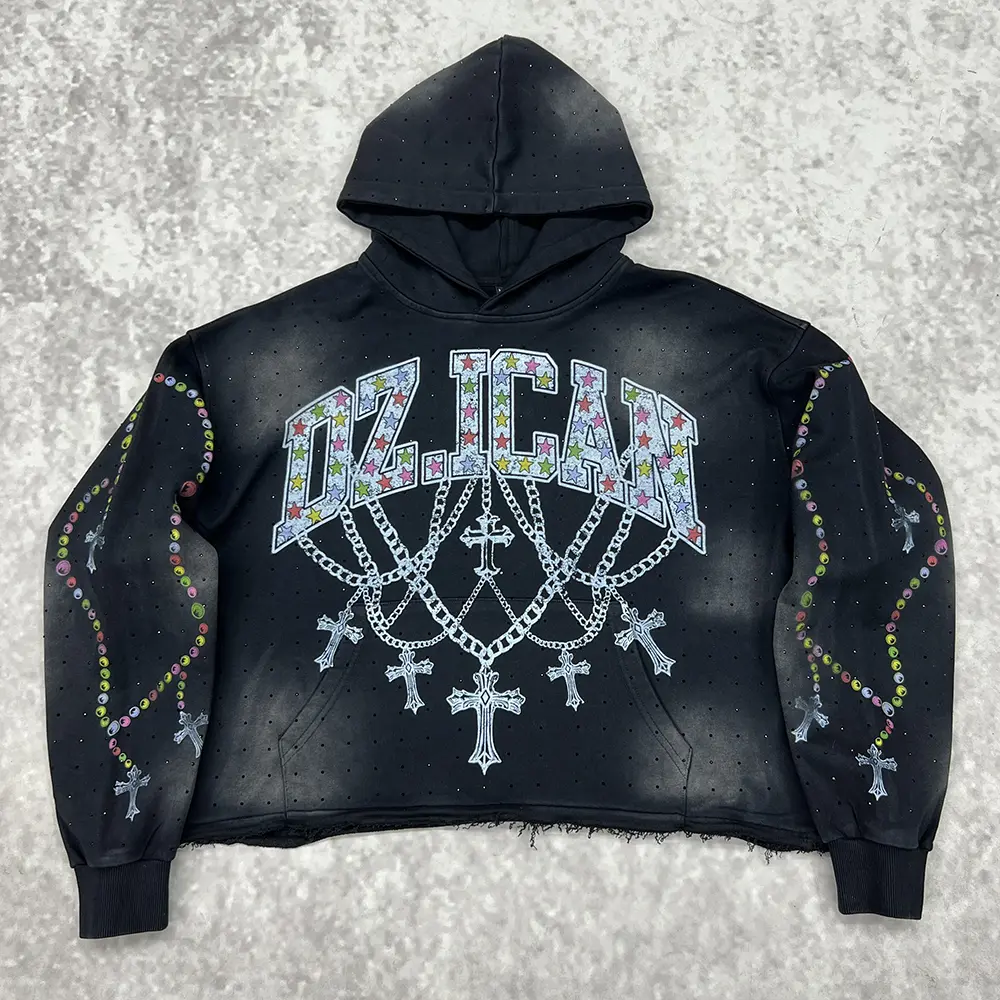
- Puff print
- Chenille embroidery
- Rhinestones
- Garment washing
Heavier hoodies usually produce stronger visual results.
Best GSM for Hoodies in 2026 Streetwear Trends
Current streetwear trends favor:
- Oversized silhouettes
- Boxy cuts
- Vintage washing
- Structured fits
Because of this, many brands now choose:
- 380GSM
- 420GSM
- 460GSM
instead of traditional 280–320GSM fabrics.
But market positioning matters.
European brands often prefer balanced weights around 350–420GSM for year-round retail.
North American streetwear labels increasingly request ultra heavyweight fleece above 450GSM.

Cotton Type Matters Alongside GSM
Many buyers focus only on GSM and ignore fiber quality.
But two hoodies with identical GSM can feel completely different depending on:
- Cotton grade
- Yarn count
- Brushing quality
- Fleece construction
- Dyeing process
For example:
- Cheap open-end cotton may feel rough even at 400GSM
- Compact cotton fleece at 350GSM can feel softer and more premium
Always evaluate:
- GSM
- Fabric composition
- Surface texture
- Shrinkage stability
- Wash performance
together.
Common Mistakes Brands Make When Choosing Hoodie GSM
Choosing Heavy Fabric Without Testing Fit
Heavy fabric changes:
- Shoulder drop
- Sleeve drape
- Hood volume
- Neckline tension
A pattern designed for 280GSM often cannot simply be upgraded to 500GSM.
Ignoring Shipping Costs
Heavyweight hoodies significantly increase:
- Air freight cost
- Warehousing cost
- Fulfillment cost
For large-volume ecommerce brands, this matters.
Prioritizing GSM Over Fabric Quality
Some factories market extremely high GSM hoodies using low-grade yarn to appear “premium.”
High GSM alone does not guarantee quality.
Experienced buyers usually request:
- Fabric swatches
- Wash tests
- Shrinkage reports
- Composition verification
before approving bulk production.
How Professional Manufacturers Help Brands Choose the Right GSM
Experienced hoodie manufacturers typically help brands evaluate:
| Production Factor | Why It Matters |
|---|---|
| Target retail price | Impacts allowable fabric cost |
| Printing technique | Affects ideal fabric density |
| Fit style | Determines structure requirements |
| Sales region | Climate affects GSM choice |
| Shipping strategy | Heavyweight garments cost more to transport |
| Brand positioning | Premium brands usually require heavier fabrics |
Good factories do not simply recommend the heaviest fabric.
They recommend the most commercially suitable fabric.
FAQs About GSM in Hoodie Production
What is the best GSM for hoodies?
For most fashion and streetwear brands, 350–450GSM is considered the best balance between comfort, structure, and premium feel.
Is 400GSM good for hoodies?
Yes. 400GSM is widely used in premium streetwear because it creates a structured oversized silhouette while remaining wearable.
Is higher GSM always better?
No. Higher GSM increases warmth and structure but also raises cost, weight, and manufacturing complexity.
What GSM do luxury hoodies use?
Many luxury and heavyweight streetwear hoodies use 450–600GSM brushed fleece fabrics.
Does GSM affect hoodie shrinkage?
Yes. Heavier fleece fabrics can shrink differently during washing and garment dyeing, especially if pre-shrinking is not handled correctly.