
In 2026, nearshoring hype dominates sourcing conversations for US and European streetwear brands. Yet on factory floors in Guangzhou, the data tells a different story: for trend-driven streetwear, Guangzhou vs nearshoring 2026 still favors China on total landed cost, development velocity, and risk-adjusted economics for the majority of brands running frequent drops and low-to-mid volume programs.
The narrative that “nearshoring always wins on speed and cost” ignores critical realities — strict rules-of-origin requirements, higher base production costs, fragmented supply chains, and the hidden cost of markdowns when you cannot iterate fast enough on trend-sensitive product. Guangzhou’s vertically integrated ecosystem continues to deliver decisive advantages precisely where streetwear brands compete: speed to market on new drops, flexible MOQ, and the ability to execute complex constructions, heavyweight fabrics, and custom finishes at competitive economics.
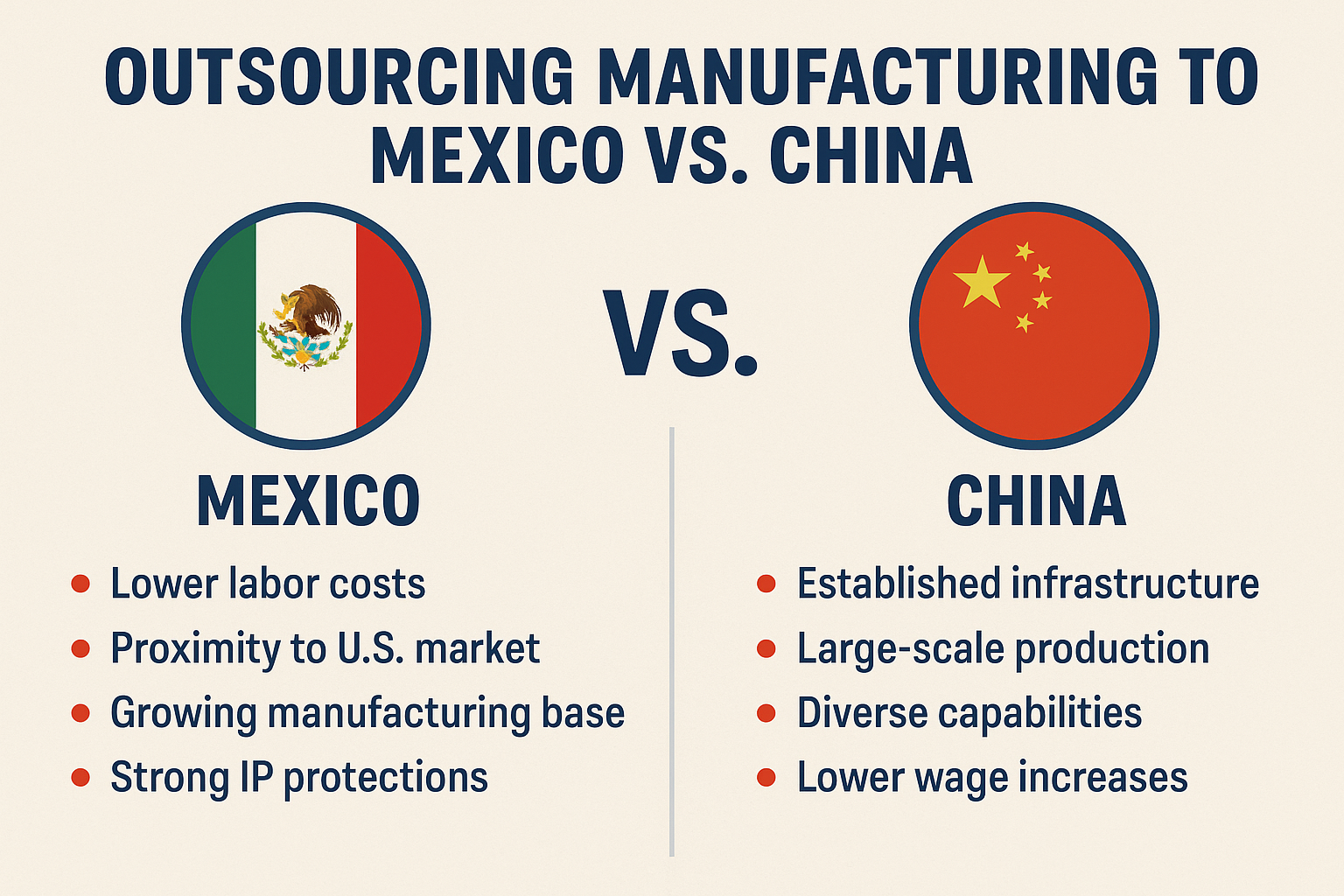
Outsourcing Manufacturing to Mexico vs. China
The Real Economics: Tariffs, Landed Cost & Markdown Risk
Tariffs on China-origin apparel have risen significantly, with effective rates often reaching 30–50%+ including legacy Section 301 and additional layers. A typical FOB $10 hoodie or tee from a quality Guangzhou factory can land at $17.85–$18.70 after duties, inland transport, and ocean freight. Mexico USMCA-qualified production (yarn-forward compliant) can achieve $14.90–$16.50 landed with 0% duties and much shorter transit.
However, this simple FOB + duty comparison misses the bigger picture for streetwear.
Key insight from production data: For 300–800 unit test or drop orders — common in streetwear — nearshoring frequently loses on total economics once you factor in:
- Higher CMT/FOB in Mexico due to labor rates and lower scale efficiency on complex styles.
- Fabric and trim often still sourced from Asia, adding cost, lead time, and compliance friction.
- Slower sampling and iteration cycles when full ecosystem is not co-located.
- Higher inventory risk and markdown exposure (15–25% of wholesale value common on missed trend drops) because replenishment, while faster, cannot match Guangzhou’s speed on new style development.
Brands that model full landed cost including markdown avoidance and working capital frequently find optimized Guangzhou sourcing delivers better margins on hero drops and trend-responsive product. Pure nearshoring wins primarily on stable, high-volume basics where full USMCA qualification is straightforward and demand is predictable.
Ecosystem Speed: Why Guangzhou Wins Development & Iteration
Guangzhou and the broader Pearl River Delta remain unmatched for vertical integration. Fabric markets, trim suppliers, printing, embroidery, washing, and finishing specialists operate within minutes to hours of each other. This density enables:
- Sampling cycles of 7–10 days for complex streetwear pieces (heavyweight fleece, custom washes, multi-location prints, distressed details).
- Real-time adjustments to fabric, trims, or construction without weeks of international coordination.
- Access to ready stock or quick-development fabrics that nearshore factories often cannot match at equivalent quality or price.
Nearshoring production lead times (25–35 days ex-factory + short trucking) look attractive on paper for replenishment. But for the initial development and first production run of trend-driven items, the full cycle is often longer and less flexible because the supporting supply base is thinner or still relies on Asian inputs.
Production reality check (2026 factory benchmarks): Many Guangzhou streetwear specialists deliver 15–25 day production windows on approved styles with low MOQ, while maintaining the ability to scale rapidly. Combined with 25–35 day ocean transit, total door-to-door for new drops is longer than Mexico — but the development velocity and iteration speed more than compensate for brands that live or die by seasonal drops and cultural relevance.
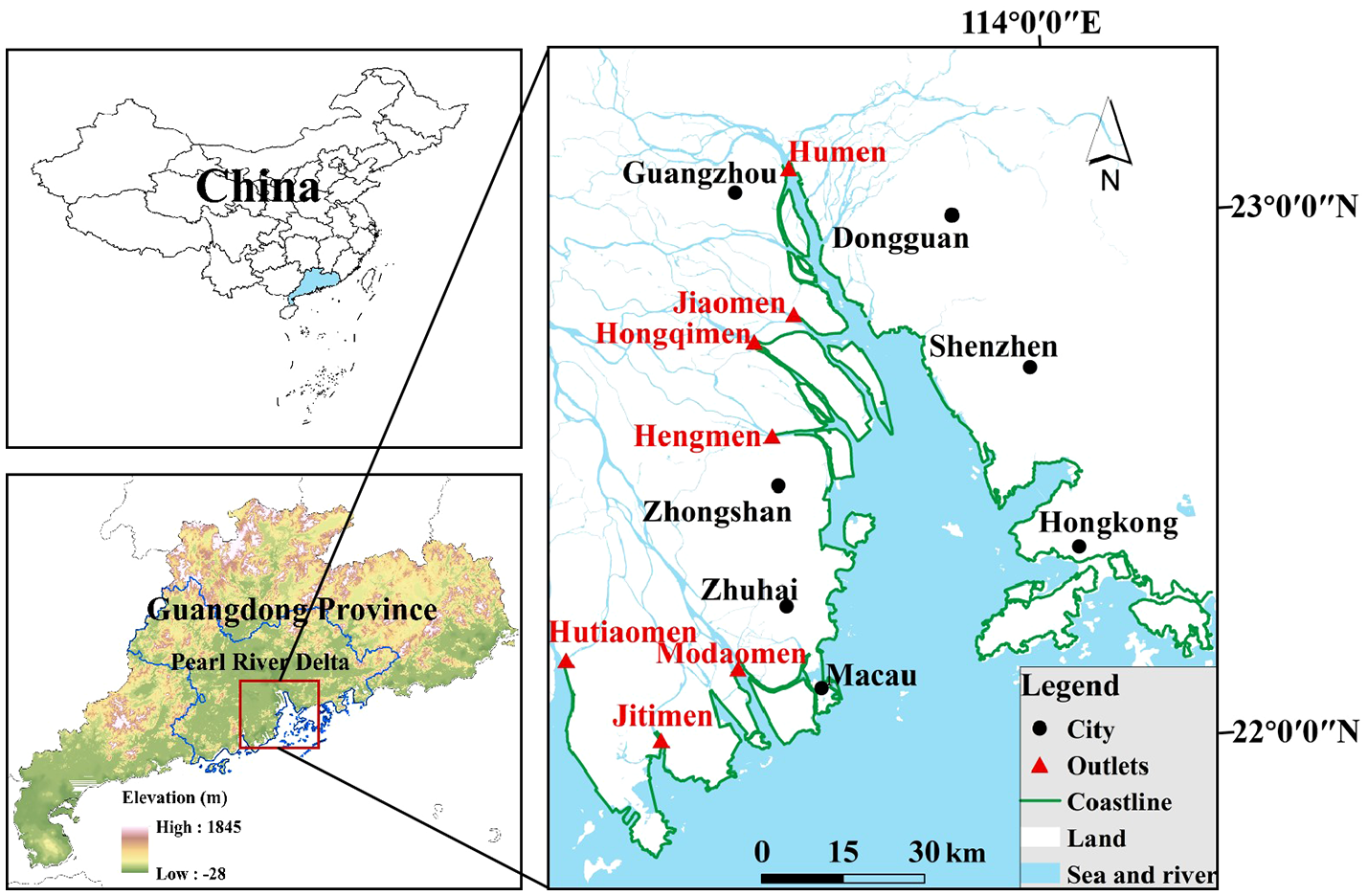
Frontiers | Spatiotemporal coastline variations in the Pearl River Estuary and the relationship with multiple human disturbances
MOQ Flexibility & Capital Efficiency for Streetwear Realities
Streetwear brands thrive on frequent, limited drops and rapid response to culture. High MOQ nearshore programs force larger bets and higher inventory risk.
Guangzhou factories routinely support 100–300 piece MOQs per style/color (sometimes lower via stock programs or shared production), allowing brands to:
- Test new graphics, washes, or silhouettes with minimal capital at risk.
- Run multiple colorways or small-batch exclusives.
- Maintain tighter inventory turns and reduce end-of-season markdowns.
This flexibility directly translates to better cash flow and lower obsolescence risk — advantages that compound when tariffs are already pressuring margins.
Quality, Specialization & Long-Term Brand Building
Guangzhou’s decades-deep specialization in streetwear techniques — heavyweight 300–450+ GSM fleece, complex garment dyeing and washing, high-density prints, premium ribbing, and technical constructions — remains difficult to replicate at scale elsewhere. Factories here have refined processes, trained operators, and equipment tuned specifically for the aesthetic and durability expectations of premium streetwear.
Nearshoring excels at simpler constructions and basic replenishment. For the hero products that define brand identity and command higher margins, the combination of quality consistency, technical capability, and ecosystem speed in Guangzhou continues to deliver superior outcomes.
When Nearshoring Actually Wins (Honest Assessment)
Nearshoring is not without merit. It delivers clear advantages for:
- High-volume, stable basic replenishment where full USMCA/CAFTA yarn-forward qualification is achievable.
- Programs where proximity reduces shipping to days and dramatically lowers inventory carrying cost.
- Brands prioritizing maximum tariff mitigation and simplest compliance on predictable SKUs.
The smartest sourcing strategies in 2026 are hybrid: Guangzhou for innovation, low-MOQ drops, complex streetwear, and trend response; nearshore partners for replenishment of proven basics. Pure all-in nearshoring often creates the “Nearshoring Trap” — higher costs and hidden dependencies without solving the core challenges of speed and flexibility that define successful streetwear brands.
FAQ: Practical Questions from Streetwear Brand Teams
Q: With current tariffs, isn’t China simply more expensive overall?
A: Not when you model full landed cost including markdown risk and development velocity. For trend-driven drops and low-to-mid volume programs, optimized Guangzhou sourcing frequently delivers better net margins than nearshoring once inventory and lost-sales costs are included.
Q: What realistic MOQ can we expect from quality Guangzhou factories in 2026?
A: 100–300 pieces per style is standard for established streetwear specialists, with options for lower via fabric stock or consolidated production. Many factories also support graduated scaling as your volumes grow.
Q: How fast can we really get samples and first production from Guangzhou?
A: Sampling in 7–10 days is achievable for most streetwear styles; production ex-factory in 15–25 days on approved orders is common with experienced partners. Total calendar time is longer than nearshore due to ocean freight, but iteration speed is significantly faster.
Q: Can Guangzhou factories help with USMCA or nearshore hybrid strategies?
A: Leading partners provide transparent landed-cost modeling, origin strategy advice, and support for diversified programs — including producing components or test runs that complement nearshore replenishment.
Q: What about sustainability and compliance in Guangzhou?
A: Top factories have invested heavily in certifications (GRS, OEKO-TEX, BSCI, etc.), traceability systems, and cleaner processes. Brands serious about compliance work with audited partners who provide full documentation.
Conclusion: The Winning Strategy Is Portfolio Thinking, Not Binary Choices
The production front line in 2026 shows clearly that Guangzhou vs nearshoring 2026 is not a simple “China loses” story. For streetwear brands, Guangzhou’s ecosystem still delivers unmatched advantages in development speed, MOQ flexibility, technical execution, and risk-adjusted economics on the styles that matter most — the ones that drive culture, margins, and brand equity.
The brands winning today treat sourcing as a deliberate portfolio: Guangzhou for speed-to-drop, innovation, and core hero product; nearshore capacity for efficient replenishment of proven volume. Realizing this balanced advantage at scale requires a manufacturing partner that deeply understands both ecosystems, can model true landed costs transparently, and offers the flexibility streetwear demands.
This is exactly the core value Qianshiwear delivers as your strategic OEM/ODM partner in Guangzhou. We combine deep streetwear specialization, flexible low-MOQ production, fast sampling, and sophisticated landed-cost modeling to help brands make data-driven decisions — whether optimizing pure Guangzhou programs or building smart hybrid strategies.
Ready to model your next drop or replenishment program with real numbers? Visit qianshiwear.com to request a transparent cost and lead-time analysis tailored to your styles and volumes. Let’s build the sourcing approach that actually wins in 2026.











