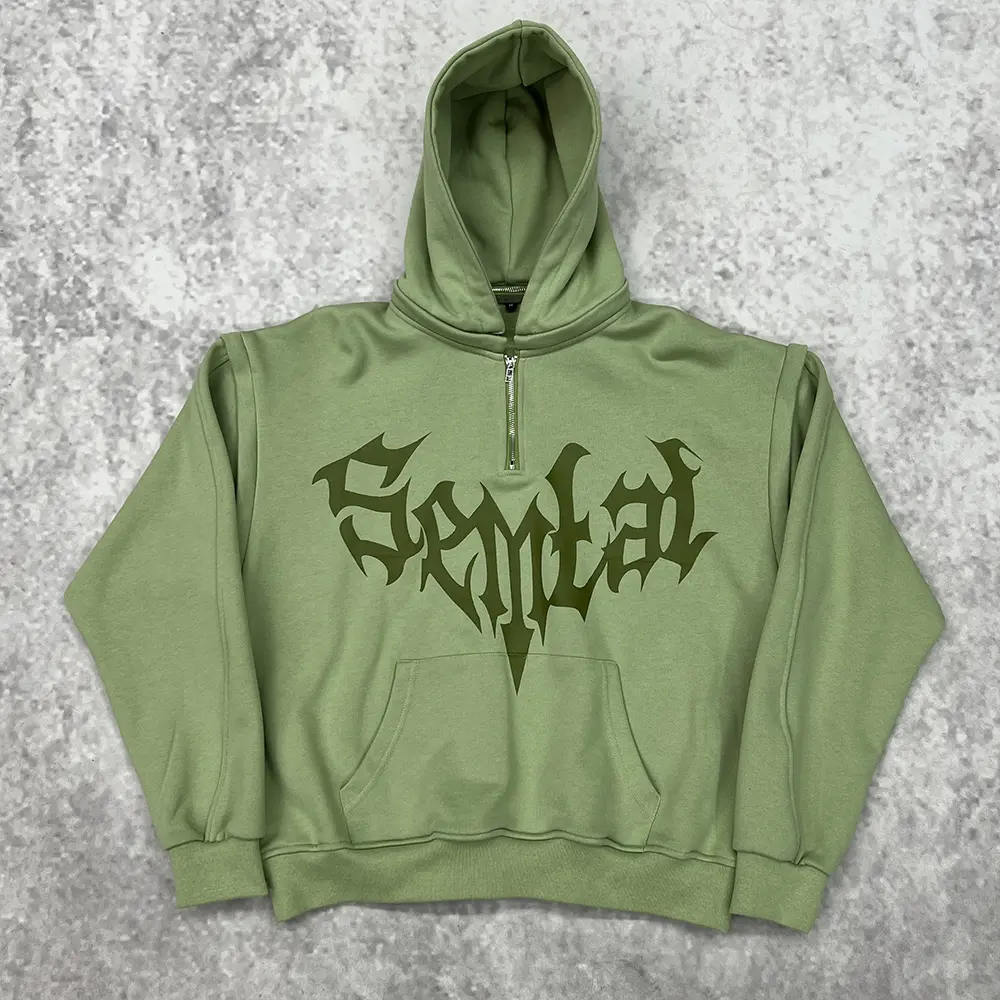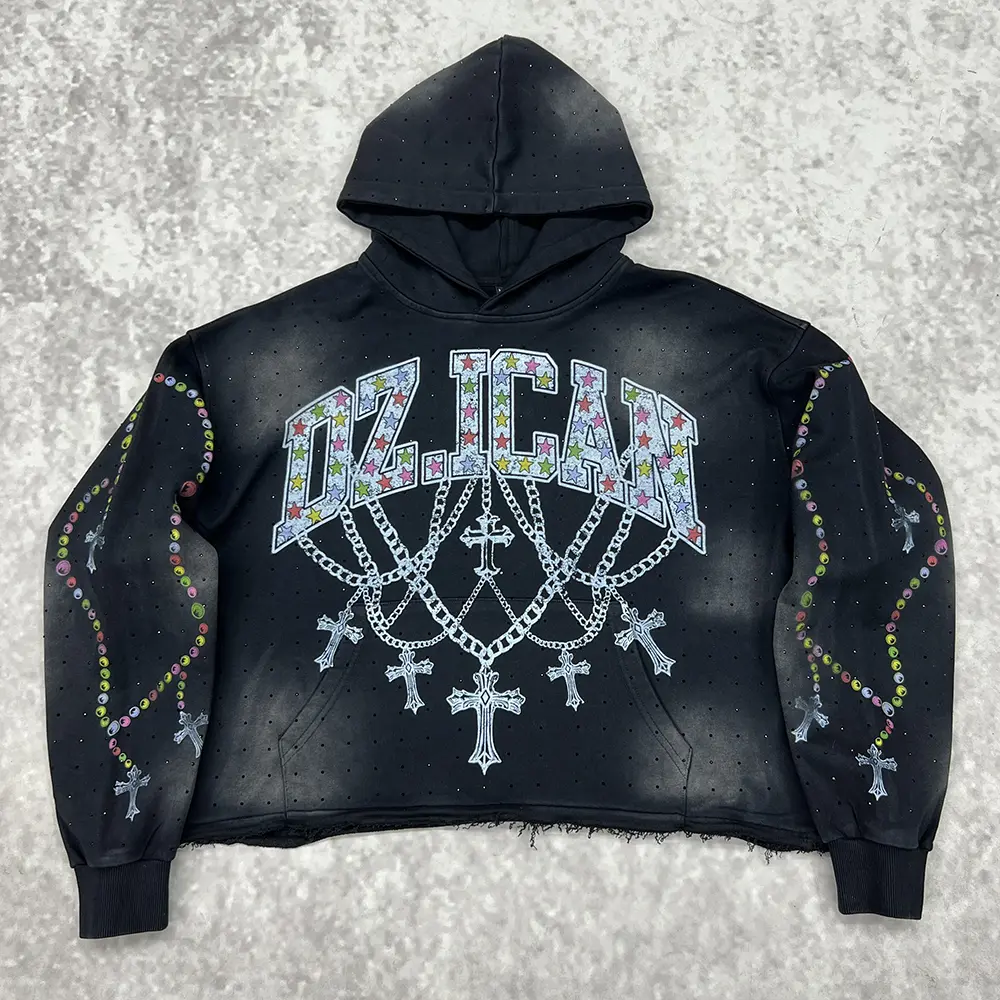

A hoodie can look approved before washing yet lose length, balance or rib shape after the first care cycle.
Hoodie fit changes after washing are rarely caused by one simple problem. The body fabric may relax, the rib may recover more strongly, the hood lining may shrink at a different rate, and tumble drying may amplify every difference. The result can be a shorter body, tighter hem, twisted side seams, raised cuffs or a hood that pulls against the neckline.
For premium and growing streetwear brands, the real goal is not to promise that a knitted garment will never move. It is to understand the expected dimensional change, build it into product development, and keep the approved result consistent from the pre-production sample to bulk and repeat orders. This article explains the causes and the nine controls buyers should use before approving production.
What Does Post-Wash Fit Change Actually Look Like?
A garment can stay within the overall size chart and still feel wrong after washing. Length loss changes the oversized proportion. Width loss can make a relaxed body feel fitted. A hem that pulls inward creates a balloon shape, while sleeve torque rotates the cuff away from the natural wrist position. The buyer therefore needs more than a single shrinkage percentage.
Post-wash evaluation should cover garment measurements, symmetry, seam position, hood balance, rib recovery, hand feel and decoration stability. The same logic supports the broader controls in Why Clothing Samples Don’t Match Bulk Production – And How to Prevent It, the quality-control pillar for keeping development decisions connected to bulk production.
| Post-wash symptom | Likely causes | What the buyer should check |
| Body becomes noticeably shorter | Lengthwise fabric relaxation, aggressive drying, unstable finishing | Back length and front length before and after the agreed care cycle |
| Hem pulls inward | Rib shrinks or recovers differently from the body | Rib composition, relaxed rib length, attachment ratio and body width |
| Side seams twist | Knit skew, spreading tension or panel grain misalignment | Side-seam position and spirality after repeated laundering |
| Sleeves feel shorter | Fabric shrinkage, cuff recovery or sleeve-panel torque | Sleeve length, cuff height and shoulder-to-wrist balance |
| Hood pulls backward | Body, hood shell and hood lining move at different rates | Neck opening, hood depth, lining compatibility and seam tension |
| Fleece feels flatter or stiffer | Nap compression, heat, chemistry or drying method | Thickness, hand feel, drape and surface after the approved cycle |
Why Hoodie Fit Changes After Washing
1. Knitted Fabric Relaxes After Heat, Water and Movement
French terry and fleece are knitted structures held under tension during knitting, dyeing, finishing, spreading and sewing. Laundering allows part of that tension to release. The loops and yarns settle into a new configuration, so length and width may not change equally. This is why a fabric’s GSM alone cannot predict the finished fit.
Buyers deciding between constructions should compare their real behavior, not only the specification sheet. Our French terry vs fleece guide for premium hoodies explains how loopback and brushed interiors affect warmth, drape, bulk and product positioning.
2. Body Fabric and Rib Do Not Behave as One Material
A hoodie combines several structures: body fabric, rib cuffs and hem, pocketing, hood lining, neck tape, thread and sometimes interfacing. Rib is designed to stretch and recover, so it may pull more strongly after washing than the body. If the rib length, elastane content or attachment ratio is wrong, the body can blouse above the hem even when the chest measurement remains acceptable.

Body fabric, brushed fleece and rib should be tested as interacting components, not approved as isolated swatches.
3. Skew and Spirality Change the Garment’s Balance
Dimensional change measures size; skew measures alignment. A body panel can keep most of its width yet rotate after washing, moving the side seams toward the front or back. AATCC TM179 addresses skew change in fabric and garments after laundering, while AATCC TM135 and TM150 cover dimensional change procedures for fabric and garments. These methods provide repeatable procedures, but the brand and supplier still need to agree on the relevant care cycle and acceptance criteria.
4. Brushing and Surface Finishing Affect Fleece Differently
Brushed fleece may lose loft or compress after washing and drying. That can change perceived weight, warmth and drape even when the tape measurements look acceptable. A soft sample made from one finishing lot can also behave differently from bulk fabric with another brushing intensity. Hand-feel approval and dimensional testing should therefore use material from the intended bulk route.
5. Garment Washing Adds Another Process Variable
Mineral wash, enzyme wash, pigment wash and other appearance treatments expose the assembled garment to moisture, chemistry and mechanical action before the customer ever washes it. These treatments can stabilize some dimensions but also create uneven shrinkage, seam puckering or shade movement when poorly controlled. Brands using special finishes should connect appearance approval with the risk controls in our guide to how wash treatments change streetwear performance.
6. Decoration Can Restrict Local Movement
A large screen print, high-density puff print, embroidery backing or applique can make one area of the garment move differently from the surrounding knit. A heavy chest graphic may resist stretch while the uncovered back relaxes. Embroidery can also pull a lightweight or unstable panel if the backing, density and hoop tension are not balanced. The decorated garment, not only an undecorated blank, needs a wash test.
7. Care Conditions Can Expose a Weak Development Decision
Water temperature, detergent, load size, agitation and drying method all affect the result. Tumble drying usually applies more heat and mechanical action than flat or line drying. A supplier cannot control every consumer laundry habit, but the brand can define a realistic labeled care route and test consistently against it. ISO 3759 covers preparation, marking and measurement of garments and fabrics; ISO 5077 covers determination of dimensional change; and ISO 15487 describes domestic washing and drying procedures for assessing textile appearance.
9 Proven Steps to Prevent Unwanted Hoodie Fit Changes
1. Test the Intended Fabric Before Locking the Pattern
Ask for dimensional stability data from the intended fabric construction, color and finishing route. A test from a similar fabric is useful background but should not be treated as proof for the selected bulk material. Dark reactive dyes, pigment finishes, brushing and compacting can all alter behavior.
2. Define the Exact Wash and Dry Protocol
Write the machine cycle, temperature, detergent, drying method and number of cycles into the development record. Without one agreed method, the buyer’s result and the factory’s result cannot be compared fairly.
3. Mark and Measure the Garment Consistently
Condition the sample, place it without stretching and use the same measurement points before and after laundering. Record body length, chest, sweep, shoulder, sleeve, cuff, hood height and other style-critical points. A percentage without the original measurement can hide how strongly the visual proportion changed.
4. Adjust the Pattern from Stable Test Data
Pattern compensation should respond to verified lengthwise and widthwise behavior. Adding the same allowance everywhere can create a distorted pre-wash sample or an incorrect post-wash silhouette. The pattern maker should protect design intent, not simply enlarge every panel.
5. Test the Complete Trim and Decoration System
Use the intended rib, drawcord, zipper, hood lining, thread and decoration. Component compatibility matters because one unstable part can change the whole garment. Before approval, buyers should use a written fabric-and-trim checklist such as the questions to ask before approving custom streetwear fabric.
6. Wash the Fit Sample or PP Sample
An unwashed fit sample shows construction and initial silhouette; it does not confirm consumer-care performance. When wash response is important, evaluate an appropriate development sample and then repeat the check on the pre-production sample made with bulk-intended materials.
7. Review Appearance, Not Only Measurements
Check seam twist, pocket shape, rib waviness, hood balance, print cracking, embroidery puckering and fleece loft. Photographs on body or a consistent dress form help the team compare silhouette, not just numbers.
8. Control Bulk Fabric Lots and Finishing
Approve the bulk fabric lot before cutting and confirm that compacting, brushing, washing and relaxation follow the agreed route. The sample-to-bulk production checklist is useful for transferring these approvals into purchase, cutting and inline QC records.
9. Keep a Sealed Post-Wash Standard for Repeat Production
Retain the approved PP sample together with its pre-wash measurements, post-wash measurements, care protocol and images. For repeat orders, compare the new fabric lot and production output with this standard. This turns wash performance into a repeatable production control rather than a memory-based judgment.
| Control point | Responsible team | Approval evidence |
| Fabric stability and skew | Fabric mill and product development | Test report linked to construction, color and finish |
| Wash and dry protocol | Brand and supplier | Written cycle matching intended care label |
| Pattern compensation | Pattern maker | Revised pattern and graded measurement chart |
| Full-garment wash test | Sample room and QC | Before/after measurements, photos and appearance notes |
| Bulk lot consistency | Fabric inspection and production | Lot identity, relaxation record and approved swatch |
| Repeat-order control | Merchandising and QC | Sealed PP standard and retained post-wash sample |
How to Connect Wash Testing with Sample and Bulk Approval
The best time to find a fit problem is before the pattern, fabric and decoration are all locked. A proto sample may reveal obvious proportion issues. A fit sample confirms balance and movement. A size set checks grading. The PP sample should confirm the final combination of bulk-intended fabric, trims, construction and decoration. Which sample needs washing depends on the risk, but the final approval route must produce evidence that can be transferred to bulk.

Post-wash QC should compare the production garment with a documented and retained approval standard.
During production, inline checks should confirm panel direction, rib attachment, seam balance and measurement trends. Final inspection should review both unwashed production dimensions and any agreed wash-test sample. Our guide to garment quality control before shipping shows how measurement, workmanship, decoration and packing checks work together before release.
What Is a Reasonable Shrinkage Limit for a Hoodie?
There is no single universal percentage that fits every hoodie. The right limit depends on fiber content, knit structure, finishing, garment wash, care label, intended silhouette and brand standard. A small length change may be visually serious on a cropped hoodie but less important on a long oversized style. A buyer should therefore agree on point-of-measure tolerances and appearance criteria rather than copy an unsupported number from another product.
The more useful question is: after the agreed wash and dry cycle, does the garment still match the approved fit intent, remain within the agreed specification, and perform consistently across sizes and production lots?
FAQ
Should a hoodie fit sample be washed before approval?
Yes when dimensional stability, garment washing, heavy decoration or component compatibility creates meaningful risk. At minimum, a PP sample made from bulk-intended materials should follow the agreed wash-test route before bulk release.
Why does a hoodie become shorter but not much narrower?
Knit structures can relax differently in length and width because of loop geometry, processing tension and finishing. That is why measurements should be recorded by direction instead of reported as one general shrinkage figure.
Can a higher GSM hoodie still shrink?
Yes. GSM describes mass per area, not dimensional stability. A heavy fabric can still change if its knit structure, yarn, finishing tension or drying response is not controlled.
Why does the waistband feel tighter after washing?
The rib may recover or shrink more than the body fabric. Composition, rib length, elastane performance and attachment ratio all influence how strongly the waistband pulls inward.
How should brands approve wash performance for repeat orders?
Keep the approved care protocol, measurement records, fabric lot information, images and a sealed post-wash PP sample. Test the repeat-order fabric and compare production results with the same standard.
Build the Post-Wash Fit into Product Development
Hoodie shrinkage becomes expensive when it is discovered after bulk goods reach the customer. The practical solution is to connect fabric approval, pattern development, component compatibility, wash testing and bulk QC before cutting begins.
At Qianshiwear, hoodie development can include fabric and trim review, pattern adjustment, decorated sample testing, before-and-after measurement records, PP approval and production quality control. The objective is not an unrealistic promise of zero movement. It is a premium hoodie whose post-wash fit is understood, approved and repeatable as the brand scales.