
If you’re a fitness brand founder, yoga wear creator, or sports club manager, you know the drill. You’ve got killer designs ready for your next drop—moisture-wicking leggings that actually stay dry during HIIT, or tracksuit sets that move with athletes instead of fighting them. But every supplier quote lands with the same roadblock: “Minimum 300 pieces.” That’s a lot of inventory to warehouse while you test the market, and the last thing you need is a garage full of unsold stock eating your startup capital.
That’s exactly why smart sourcing now starts with a low MOQ sportswear manufacturer. These partners flip the script, letting you order custom tracksuit small batch runs as low as 50 pieces while still delivering the same premium gym clothing quality that big brands demand. In this guide, we break it down from the factory floor—real numbers on fabrics, costs, and processes—so you can make confident decisions and launch faster.
1. Why Traditional Suppliers Fail Startup Fitness Brands (And How Low MOQ Sportswear Manufacturers Fix It)
Most overseas factories are built for volume. Their cutting tables and dyeing vats run most efficiently at 500+ pieces per colorway. That 300-piece minimum isn’t greed—it’s math. But for a new gym clothing line or yoga brand testing three color options, that’s $9,000–$15,000 tied up before you sell a single set.
A true low MOQ sportswear manufacturer solves this by mixing stock functional fabrics with flexible production cells. At our Guangzhou facility, we dedicate smaller lines to runs of 50–150 pieces, using digital pattern optimization that cuts fabric waste to under 4%. Result? You test the market without betting the farm.
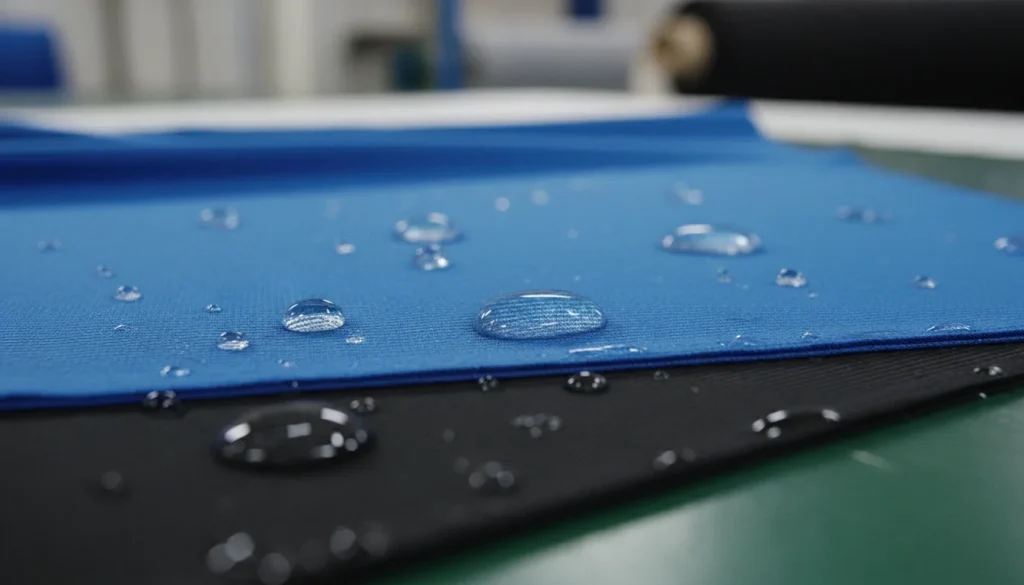
2. Functional Fabrics That Actually Perform: The Supply Chain Specs That Matter
Forget “soft and stretchy” marketing fluff. From the production side, functional performance comes down to measurable specs that affect both cost and customer retention.
Here are the four fabric categories we run most for premium gym clothing and tracksuits:
- Performance Polyester/Spandex (220–280 GSM): 85–90% polyester, 10–15% spandex. Wicking height exceeds 12 cm in 30 minutes per AATCC test. Four-way stretch recovery >95% after 50 washes. Ideal for leggings and base-layer tops. Cost: $4.80–$6.20 per meter at small batch.
- Brushed Fleece Backed (300–380 GSM): Soft interior for tracksuit jackets, outer face treated for wind resistance. Keeps athletes warm during outdoor sessions yet breathes. Deformation rate after 20 washes: <3%. Cost: $7.50–$9.80 per meter.
- Recycled Eco-Performance Blend (250 GSM): 100% post-consumer polyester with spandex. Same wicking as virgin but with GRS certification. Perfect for brands targeting eco-conscious clubs. Slight 8% premium on raw material but zero MOQ penalty when we use existing rolls.
- Compression Tech Mesh (180–240 GSM): Targeted 20–30 mmHg graduated compression zones. Used in premium gym shorts and fitted tracksuit pants. Durability: 100+ abrasion cycles without pilling.
These aren’t guesses—they’re the exact grades we source daily from verified mills in Shaoxing and keep in inventory for low MOQ sportswear manufacturer clients.
[Image: Side-by-side infographic chart comparing four functional fabric types for gym clothing—GSM, wicking time, stretch recovery, and small-batch cost per meter—with real production samples shown next to each row]
3. Step-by-Step: How Custom Tracksuit Small Batch Production Actually Works
Let’s walk the factory path so you know what to ask any premium gym clothing manufacturer:
- Design & Tech Pack Review (1–2 days): We check your specs against pattern rules—armhole drop, inseam tolerances, and reinforcement zones for high-stretch areas.
- Fabric Selection & Approval (3 days): Pull from stock or mill-direct. You get physical swatches with lab reports.
- Digital Pattern Grading & Marker Making (2 days): Software ensures <4% waste even at 50 pieces.
- Cutting & Bundling (1–2 days): Laser-guided for precision on stretch fabrics.
- Sewing & Assembly (5–8 days): Specialized overlock stations for flat seams that won’t chafe during burpees.
- Sublimation or Screen Print (2–4 days): Full-coverage prints on moisture-wicking base without cracking.
- QC & Packing (2 days): 100% inspection plus wash tests on random samples.
- Shipping (7–12 days via sea or 4–6 via express): FOB Guangzhou or DDP to your door.
Total lead time for custom tracksuit small batch: 21–35 days. That’s 40% faster than traditional 300-piece orders because we skip bulk dyeing queues.
4. Real Cost Breakdown and MOQ Optimization That Saves You Money
Here’s transparent pricing from the production line (50–200 piece runs, 2026 rates):
| Item | MOQ | Unit Cost (per set) | Total for 100 pcs | Key Variable |
|---|---|---|---|---|
| Basic Tracksuit (poly/spandex) | 50 | $18–$22 | $1,900 | Fabric GSM & print complexity |
| Premium Gym Set (fleece + compression) | 75 | $24–$29 | $2,650 | Added lining & reinforcements |
| Eco-Recycled Version | 50 | $21–$25 | $2,300 | Certification paperwork |
Compare that to a 300-piece traditional order at $12–$15 per set—you pay more per piece upfront with low MOQ, but you only commit $2,000 instead of $9,000. Scale to 500 later and the per-piece drops 25–30%.

5. Choosing the Right Low MOQ Sportswear Manufacturer: Decision Framework by Brand Stage
Startup phase (first 3 collections): Prioritize partners offering 50-piece MOQ and stock fabric options. Ask for their average 3-month repeat order rate—ours sits at 68% because clients reorder winners fast.
Growth phase (scaling to 1,000+ monthly): Look for hybrid lines that can ramp from small batch to bulk without re-sourcing fabrics. A premium gym clothing manufacturer with in-house testing lab saves you third-party certification costs.
Mature clubs & teams: Demand consistent color matching across seasons—digital color management systems are non-negotiable.
6. Avoiding the Top 3 Sourcing Pitfalls That Kill Fitness Launches
- Pitfall 1: Ignoring stretch recovery data. A cheap fabric may feel great new but bags out after two washes.
- Pitfall 2: Overlooking labeling compliance (fiber content, care instructions, country of origin).
- Pitfall 3: Assuming all “functional” claims are equal—demand lab reports, not just supplier words.

FAQ: Real Answers from the Production Floor
Q: Every supplier wants 300 pieces minimum—can MOQ go lower for custom tracksuits?
A: Yes. A dedicated low MOQ sportswear manufacturer like Qianshiwear routinely starts at 50 pieces by using pre-dyed stock fabrics and grouped cutting runs. No quality compromise.
Q: Which fabrics give the best moisture-wicking and stretch for gym clothing?
A: 250–300 GSM polyester with 12% spandex. Independent tests show it pulls sweat 3x faster than cotton blends and retains shape after 50 machine cycles.
Q: How much does small batch actually cost compared to bulk?
A: Expect 25–40% higher per unit at 50–100 pieces, but total investment drops 70% versus 300-piece minimums. Most clients break even after selling just 35–40 sets.
Q: Do you handle private labeling and custom packaging for premium gym clothing?
A: Absolutely—woven labels, hang tags, and recycled poly bags are standard at no extra MOQ.
Q: What’s the realistic lead time for a custom tracksuit small batch order?
A: 21–35 days from approval, including full QC. Faster than most volume factories because we don’t wait for massive dye lots.
The 2026 Production-Line Truth: Agility Beats Volume
Here’s the bold call from someone who’s cut patterns for thousands of fitness drops: brands that lock into 300-piece commitments in 2026 will watch nimble competitors launch three collections while they’re still clearing last season’s inventory. The winners source from low MOQ sportswear manufacturers who treat small batches as serious business, not side gigs.
Achieving that speed and quality without inventory risk comes down to one thing—finding a manufacturing partner that understands both technical fabric performance and brand timelines. That’s the core value of Qianshiwear as your low MOQ sportswear manufacturer. We combine flexible custom tracksuit small batch production, premium gym clothing with proven moisture-wicking and stretch fabrics, and end-to-end support from design validation to global shipping.
Ready to move your fitness line from sketch to store without the garage-full-of-stock nightmare? Head to qianshiwear.com today, upload your tech pack, and let’s build your first winning small batch together. Your next best-selling tracksuit set is only one conversation away.
Related Articles
OEM vs ODM Clothing Manufacturing: What’s the Difference and Which to Choose?
Best Top 8 Streetwear Manufacturers for Independent Designers
Best Top 10 Sustainable Apparel Manufacturers for Streetwear
What Is a Private Label Brand: Essential Guide to Launching Your Streetwear Line
Startup’s Ultimate Guide to Selecting Reliable Clothing Manufacturers 2026











