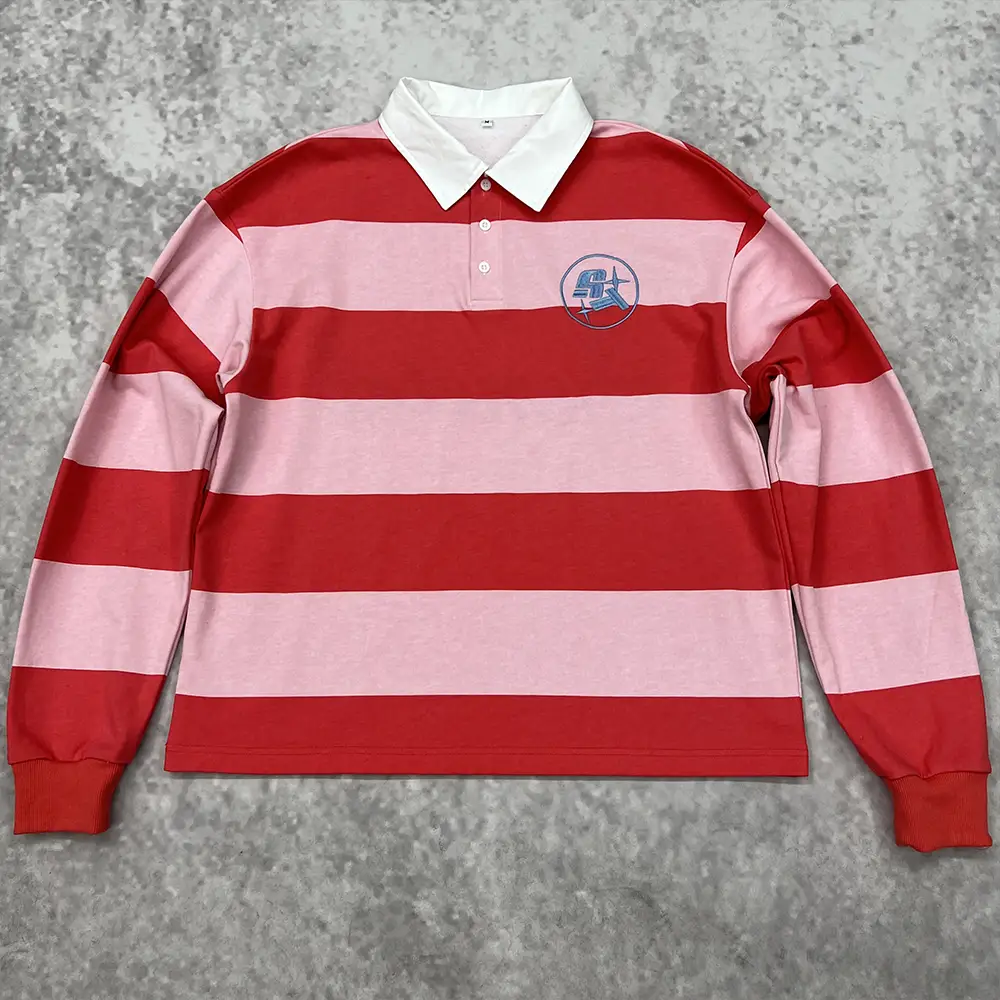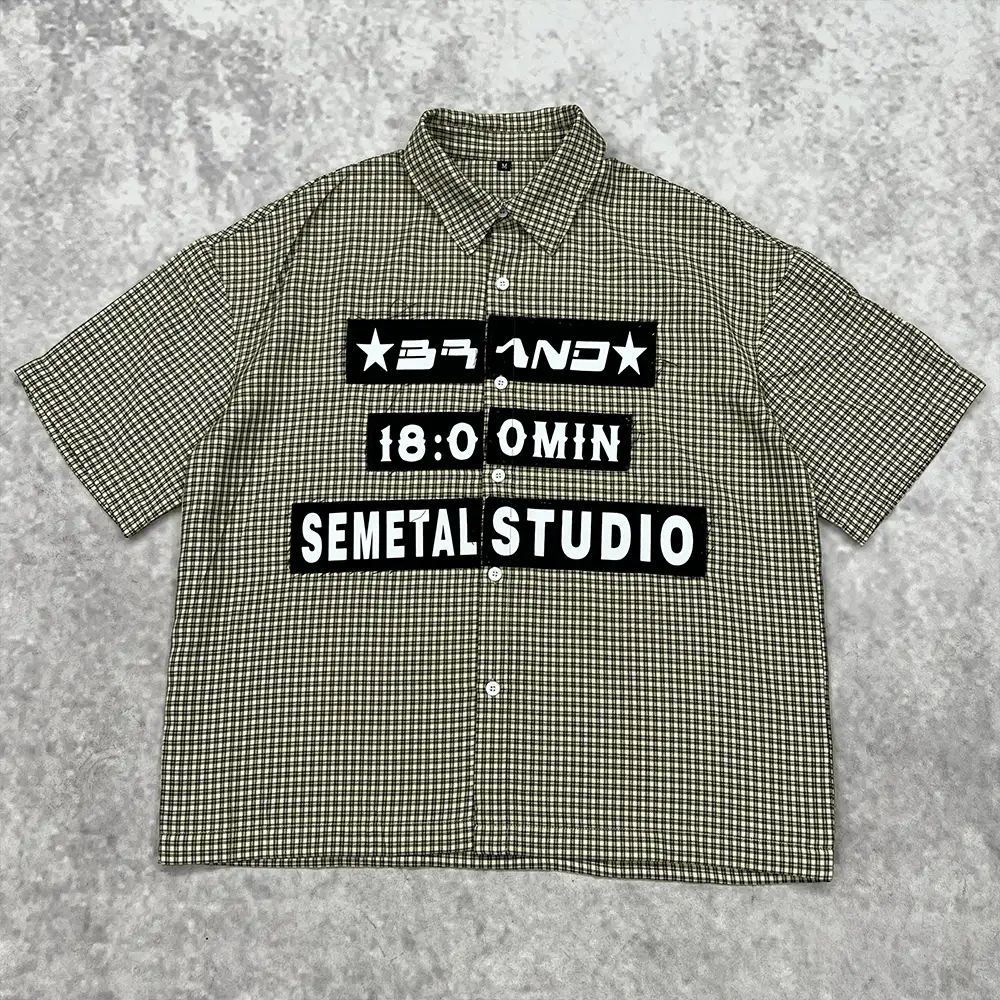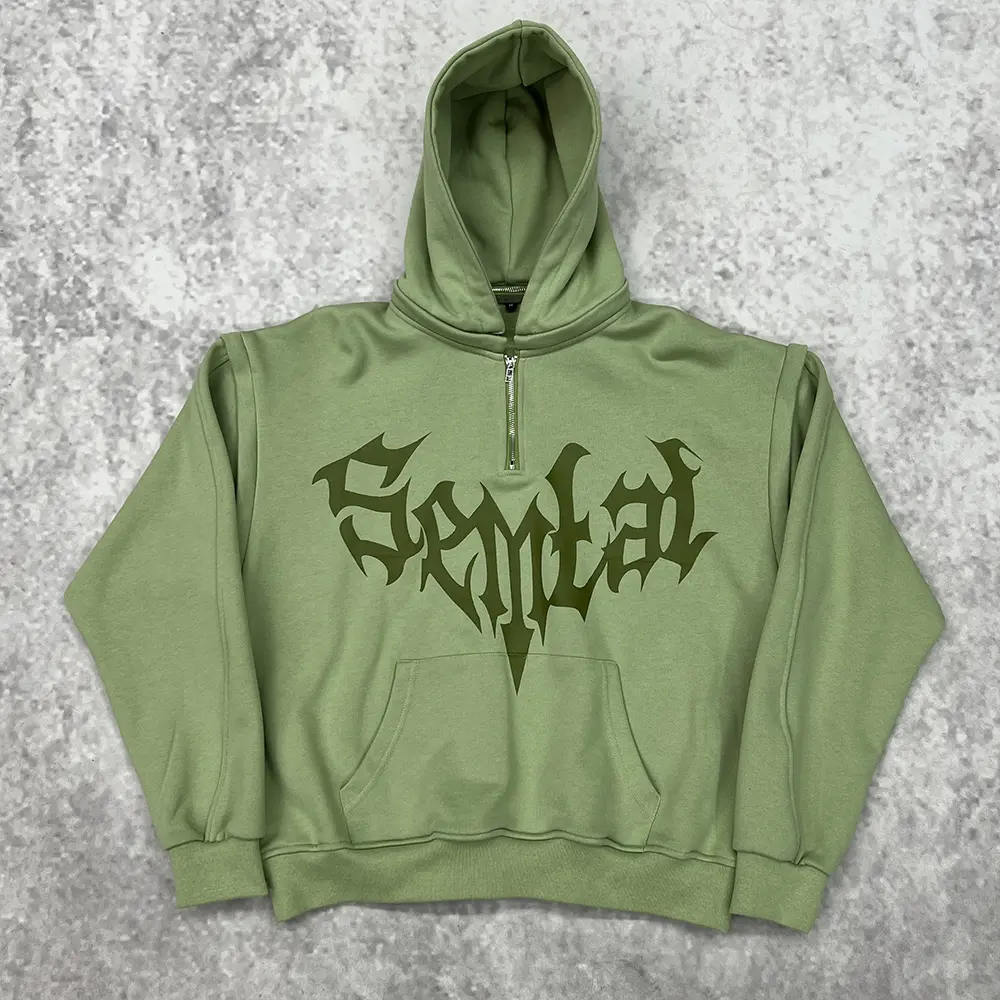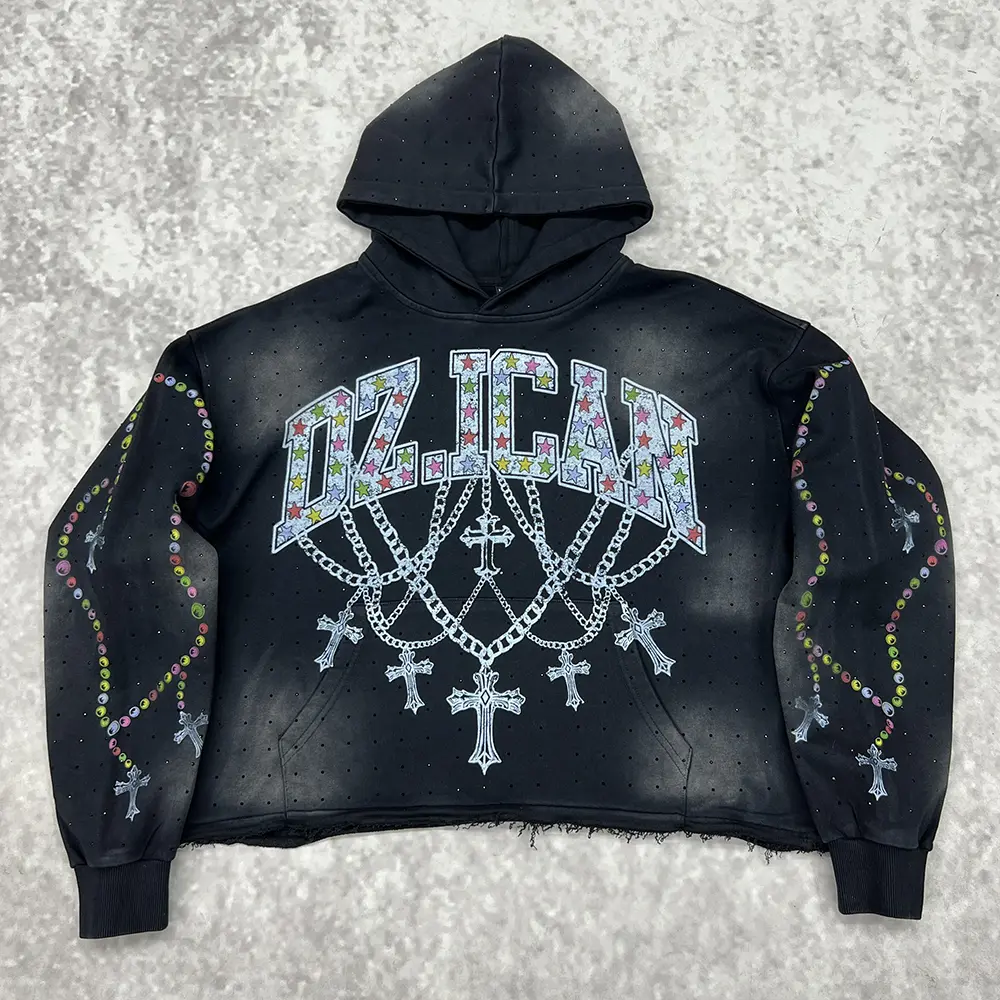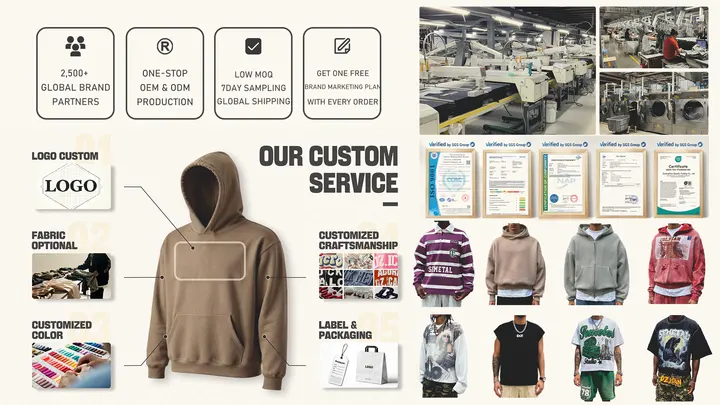

A premium hoodie does not begin at the sewing machine. It starts with design clarity, fabric decisions, pattern work and a controlled sample process.
A premium hoodie looks simple when it is finished: clean fit, balanced hood shape, stable rib, soft hand feel, sharp decoration and consistent bulk quality. But behind that simplicity is a development process that needs structure. For growing streetwear brands, the real question is not only whether a factory can sew a hoodie. The bigger question is whether the factory can turn your idea into a sample, document every decision, and repeat the same result in bulk production.
This guide explains the full premium hoodie development process from first design file to approved sample and bulk order handoff. It follows the practical sample workflow used by Qianshiwear: you send your design, we confirm the product details, quote the sample, create a digital mock-up, make the sample, send production updates, ship the finished sample, and then use the approved sample as the standard for repeat production.
If you are building a serious streetwear collection, this process helps reduce miscommunication around fabric, GSM, fit, print placement, embroidery scale, shrinkage and size tolerance. It also protects the part that matters most after the first order: quality consistency.
Why Premium Hoodie Development Needs a Controlled Process
Hoodies are more complex than many buyers expect. A heavyweight hoodie may involve custom fleece, rib with a different recovery rate, double-layer hood construction, drawcord and eyelet choices, pocket shape, panel proportions, decoration placement, wash treatment, labels and packaging. Each decision affects cost, lead time, sample accuracy and bulk production stability.
A controlled development process turns those decisions into a shared production record. Instead of relying on scattered messages, the buyer and manufacturer confirm the product in stages: design input, technical discussion, quote, digital mock-up, sample production, sample review and bulk production planning. This is especially important for established brands and growing brands that need scalable production rather than a one-time test product.
Industry standards also show why technical control matters. For example, ASTM D6193 explains that seam performance depends on stitch type, seam type, fabric, stitch density, thread tension and thread strength. For laundering performance, AATCC test methods include dimensional change and colorfastness methods that are commonly referenced when buyers need stronger fabric and wash-control language.
The Sample Process at a Glance
At Qianshiwear, the sample process is designed to move a hoodie from concept to physical approval without losing important details between design, pattern making and production. The exact timing depends on fabric availability, decoration complexity and whether the project uses stock fabric or custom fabric, but the workflow usually follows these nine stages.
| Step | What Happens | Why It Matters |
| 1 | You send your design, sketch, tech pack or reference image. | This gives the development team the first visual direction for silhouette, proportion and decoration. |
| 2 | We discuss fabric, size, print or embroidery method and quantity. | These details shape the sample quote, feasibility and expected production route. |
| 3 | We provide a sample quote and confirm sample lead time. | You can evaluate the development cost and timeline before production begins. |
| 4 | You approve the quote and make payment. | The project becomes ready for design, pattern and sample scheduling. |
| 5 | Our designer and pattern maker create a digital mock-up for your confirmation. | The mock-up helps confirm placement, proportions and construction direction before cutting fabric. |
| 6 | Once confirmed, we start sample production. | The sample room turns the approved mock-up into a physical garment. |
| 7 | We send photos or videos during production. | You can check visible progress and catch detail questions early. |
| 8 | The sample is completed and shipped to you by DHL Express or another suitable express courier. | You can review the real fit, hand feel, decoration and finishing before bulk order approval. |
| 9 | If the sample is satisfactory, we proceed with the bulk order using the same confirmed process and quality standard. | The approved sample becomes the reference for bulk production and repeat production control. |
Stage 1: Send the Design Input
The premium hoodie development process starts with the design input. This can be a professional tech pack, a flat sketch, a reference image, a brand mood board, a previous sample or a combination of these. A full tech pack is ideal because it can include measurements, fabric requirements, color references, artwork size, decoration placement, trims, labels and packaging notes. If you do not have a full tech pack yet, a clear sketch or reference image can still start the discussion.
For buyers who want stronger production clarity, Qianshiwear also provides tech pack templates that help organize garment sketches, measurements, fabric details and trims before sampling. This is useful when a brand is moving from general inspiration to a production-ready hoodie.
Stage 2: Confirm Fabric, Fit, Decoration and Quantity
Once the design direction is clear, the next step is detail discussion. This is where the hoodie becomes a product instead of an idea. Fabric selection affects structure, shrinkage, warmth, drape and decoration performance. A 400 GSM brushed fleece hoodie will behave differently from a midweight French terry hoodie. A washed oversized hoodie may need different shrinkage planning than a clean heavyweight pullover.
Decoration also changes development decisions. Embroidery may need backing, density control and stitch testing. Puff print needs heat control and ink expansion testing. DTG or digital printing needs fabric compatibility and artwork resolution checks. Rhinestone or heat-transfer details need adhesion and wash review. The discussion stage is where the team decides which process matches the brand’s target look and repeat production needs.
| Development Decision | Questions to Confirm | Production Impact |
| Fabric and GSM | French terry or fleece? 320 GSM, 400 GSM or heavier? Stock fabric or custom fabric? | Affects structure, warmth, shrinkage, sample lead time and bulk fabric planning. |
| Fit and pattern | Regular, relaxed, oversized, drop shoulder or cropped? Which size is sampled first? | Controls silhouette, grading logic, shoulder balance, sleeve length and measurement tolerance. |
| Decoration method | Screen print, embroidery, DTG, puff print, rhinestone, applique or mixed techniques? | Impacts artwork setup, sample cost, production time, wash performance and defect risk. |
| Trims and branding | Drawcord, eyelets, labels, hangtags, zipper, care label and packaging? | Creates a more complete retail-ready sample and improves bulk order accuracy. |
| Quantity plan | Is the sample for one style, a capsule collection or scalable repeat production? | Helps align sampling decisions with future bulk production planning. |

Digital mock-ups, pattern pieces, fabric swatches and decoration tests help the buyer approve details before sample production starts.
Stage 3: Sample Quote and Lead Time Confirmation
After the core details are confirmed, the factory can prepare a sample quote and lead time. A responsible quote should reflect the actual development route. For example, a stock fleece hoodie with one-color screen print is not the same as a custom fabric hoodie with wash treatment, embroidery, puff print and custom labels. The more complex the hoodie, the more important it is to quote based on real process requirements rather than an average estimate.
Lead time also depends on whether fabric is available, whether custom dyeing is needed, whether trims must be sourced, and whether the artwork requires testing. For high-value streetwear, a slightly more careful sample stage is often better than rushing into a weak sample that cannot guide bulk production.
Stage 4: Quote Approval and Payment
Once you approve the quote and make payment, the project moves from discussion to execution. This stage should also lock the first version of the development record: selected fabric direction, sample size, color, decoration method, major trims and expected sample timeline. Clear approval at this stage reduces the risk of rework later.
For growing brands, this is also the right time to think about the next stage. If the hoodie is part of a collection, the sample should be developed with repeat production in mind. That means the team should avoid one-off solutions that look good in one sample but are hard to reproduce across hundreds or thousands of pieces.
Stage 5: Digital Mock-Up and Pattern Maker Review
Before sample production begins, Qianshiwear’s designer and pattern maker create a digital mock-up for your confirmation. The mock-up is not a replacement for a physical sample, but it is a valuable checkpoint. It helps show decoration placement, color blocking, pocket position, hood proportion, label placement and overall garment balance.
The pattern maker then translates the design into pattern logic. This is where sleeve shape, shoulder drop, body width, hood depth, rib length, pocket opening and seam allowance need practical judgment. Premium hoodie development depends on this bridge between design and production. A good-looking drawing still needs a pattern that can be sewn accurately and graded consistently.
Stage 6: Sample Production Begins
After the digital mock-up is confirmed, sample production starts. The sample room cuts fabric, prepares panels, tests decoration if needed, sews the garment, attaches trims and checks finishing. For hoodies with mixed techniques, the production order matters. Some decorations happen before sewing, some after garment assembly and some after washing or finishing.
This is where technical details become visible. The sample team checks whether the fabric supports the decoration, whether the rib matches the body fabric, whether the hood sits correctly, whether the pocket opening feels comfortable, and whether the decoration scale looks balanced on the actual garment.
Stage 7: Production Updates with Photos and Videos
During sample production, photo and video updates help maintain alignment. These updates may show fabric arrival, cut panels, decoration tests, sewing progress, measurement checks or final finishing. They are not just for reassurance. They create a visual record of decisions and help catch issues while they are still fixable.
For example, if the embroidery scale looks too heavy on a pocket, it is easier to discuss during sampling than after the sample is fully finished. If a print color looks different on fleece than expected, the team can review it before bulk production. Process updates are especially useful for buyers working across time zones because they keep the development conversation concrete.
Stage 8: Sample Completion, QC and Express Shipping
When the hoodie sample is completed, it should be checked before shipping. The QC review should cover measurements, seam construction, fabric surface, decoration placement, print or embroidery quality, label position, rib recovery, hood shape, pocket alignment and overall finishing. The sample is then packed and shipped to the buyer, commonly by DHL Express or another suitable express courier.
Once the sample arrives, the buyer should review it as a production standard, not only as a design preview. Try it on a fit model, compare measurements against the size spec, wash it if wash performance matters, photograph the product under your own lighting and note any required changes clearly.
| Sample Checkpoint | What to Review | Why It Protects Bulk Quality |
| Measurements | Chest, shoulder, sleeve, body length, hem, cuff, hood and pocket position. | Creates a measurable reference for grading and bulk QC tolerance. |
| Fabric behavior | Hand feel, drape, stretch, shrinkage direction, linting and surface stability. | Reduces mismatch between sample approval and future production fabric. |
| Decoration | Artwork size, placement, hand feel, edge quality, color, adhesion and wash risk. | Prevents cracking, puckering, peeling, color shift or placement drift in bulk. |
| Construction | Stitch density, seam balance, hood attachment, pocket stitching and rib tension. | Improves durability, appearance and size consistency across production. |
| Finishing | Thread trimming, pressing, label placement, packing and final presentation. | Supports a cleaner customer experience and stronger retail readiness. |

Before shipping, the sample should be measured, photographed and checked against the development record so it can become the reference for bulk production.
Stage 9: From Approved Sample to Bulk Production
If the sample is satisfactory, the bulk order can move forward using the same confirmed process and quality standard. This is where a premium development process becomes valuable. The approved sample, digital mock-up, measurement notes, fabric details, decoration settings and QC comments become the reference package for bulk production.
For a custom hoodie manufacturer, sample-to-bulk consistency requires more than keeping one sample in the office. The production team needs clear handoff documents, bulk fabric confirmation, decoration setup records, measurement tolerance, inspection points and packing requirements. For inspection planning, buyers may also reference acceptance sampling systems such as ISO 2859-1:2026 when they need formal AQL-style lot inspection language.
| Bulk Handoff Item | What Should Be Locked | Risk If It Is Not Locked |
| Approved sample | Final garment, fit, decoration, trim and finishing standard. | Bulk production may follow memory instead of a physical reference. |
| Fabric standard | GSM, composition, hand feel, color, shrinkage target and surface texture. | Bulk fabric may feel lighter, shrink differently or change the garment shape. |
| Artwork and decoration setup | Print files, embroidery file, placement, size, color and process settings. | Prints may shift, embroidery may pucker or puff print may expand unevenly. |
| Measurement spec | Size chart, sample size reference, grading rules and tolerance. | Bulk pieces may vary too much across sizes or repeat orders. |
| QC checklist | Critical defects, major defects, measurement points and packaging checks. | Inspection becomes subjective and defects are harder to classify. |
Common Problems This Process Helps Avoid
Many hoodie production problems are not caused by sewing alone. They start earlier, when the design is unclear, the fabric is not confirmed, the decoration method is not tested, or the approved sample is not translated into a bulk production standard. A clear premium hoodie development process helps prevent the most common sample-to-bulk gaps.
| Problem | Typical Cause | Prevention Method |
| Bulk hoodie feels different from sample | Fabric lot, GSM or finishing route changed without approval. | Confirm bulk fabric against the approved sample and keep fabric records. |
| Fit changes after washing | Shrinkage was not considered during pattern or fabric selection. | Review laundering stability with appropriate dimensional-change testing language such as AATCC TM135 or garment wash checks. |
| Print cracks or feels too heavy | Ink system or print method does not match fabric texture and stretch. | Test decoration on the actual fabric and review hand feel before bulk production. |
| Embroidery puckers | Stitch density, backing or fabric stability was not balanced. | Run embroidery tests and adjust density, backing and placement before sample approval. |
| Repeat order is inconsistent | Development notes were not preserved after the first order. | Keep a repeat production file with sample photos, material records, specs and QC points. |
How Qianshiwear Supports Growing Streetwear Brands
Qianshiwear works with streetwear brands that need more than basic sewing. Our hoodie development support includes fabric and GSM discussion, sample coordination, pattern maker review, digital mock-up confirmation, print and embroidery planning, QC checks and bulk production handoff. For buyers developing a full collection, this helps connect design intent with scalable production planning.
Brands can start from a tech pack, sketch or reference image. The goal is to build a sample that is not only visually close to the idea, but also realistic for repeat production. If your next hoodie needs custom fabric, special wash, embroidery, puff print, rhinestone detail or retail-ready packaging, the earlier those requirements are confirmed, the stronger the final result will be.
When you are ready to review a new hoodie project, you can contact Qianshiwear with your design files, target fabric, size range, decoration method and planned quantity so the development team can review feasibility and sampling direction.
FAQ
Do I need a complete tech pack before starting hoodie sampling?
A complete tech pack is helpful, but it is not always required at the first discussion stage. You can start with a sketch, reference image or previous sample. However, before sample production begins, the key specifications should be confirmed clearly enough for the designer and pattern maker to create a reliable digital mock-up and pattern direction.
Why does a premium hoodie sample cost more than a simple basic sample?
A premium hoodie may require fabric sourcing, custom pattern work, decoration testing, special trims, wash treatment, digital mock-up preparation and more detailed QC. The sample cost reflects development work, not only sewing time.
Can the approved sample really be repeated in bulk production?
Yes, if the approved sample is supported by clear records: fabric standard, artwork files, measurement spec, trims, decoration settings, QC notes and production handoff. Without those records, the sample may look good but bulk consistency becomes harder to control.
What should I check when the sample arrives?
Check fit, measurements, fabric hand feel, shrinkage risk, decoration placement, stitch quality, hood shape, rib recovery, label placement and overall finishing. If the hoodie is part of a repeat production plan, document all comments before approving the bulk order.
How should I prepare my first message to a manufacturer?
Send the design file or reference image, target fabric or GSM if known, size range, decoration method, planned quantity, color direction, label and packaging needs, and your target launch timeline. Clear input makes the first quote and lead time more accurate.
Conclusion: A Premium Hoodie Is Built Before It Is Sewn
The best premium hoodies are not created by guesswork. They are built through a clear product development process: design input, technical discussion, sample quote, mock-up confirmation, sample production, process updates, QC, express shipping and sample-to-bulk handoff. Each stage protects the next one.
For serious streetwear buyers, the approved sample should become a production standard, not just a nice prototype. When the sample process is documented well, bulk production becomes more stable, repeat orders become easier, and your brand can scale with better quality consistency.